
Local Commercial Cleaning Frequency Explained for Businesses
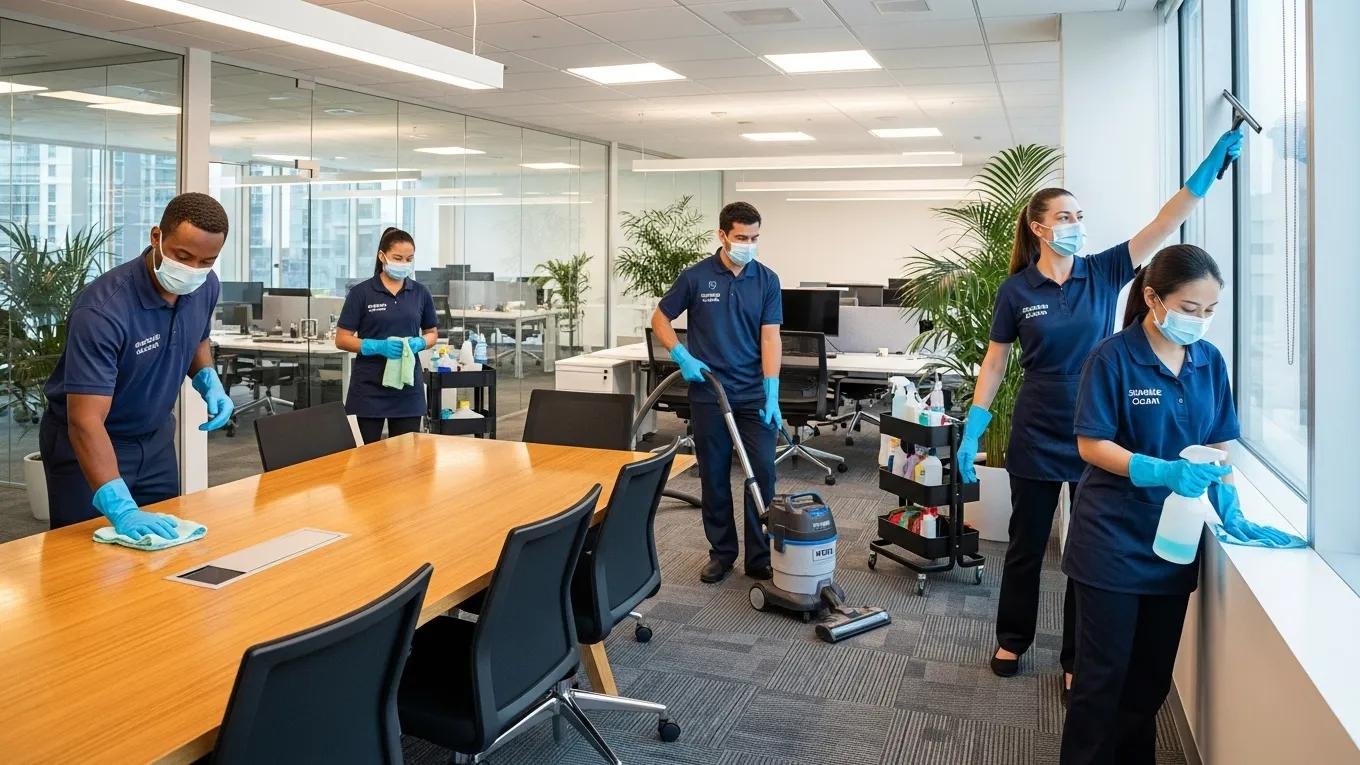
Local Commercial Cleaning Frequency Explained: Optimizing Business Cleaning Schedules
Understanding local commercial cleaning frequency helps businesses keep premises safe, compliant and productive. This guide explains the main factors that determine schedules, gives baseline intervals for common sectors, and lists practical best practices to sustain workplace hygiene. Use these recommendations to set a right‑sized cadence that balances cost and effectiveness.
Factors Influencing Cleaning Frequency
Cleaning cadence depends on the industry, the level of customer and staff traffic, and any applicable health rules. Identify these variables to build a schedule that addresses your site’s specific risks and standards.
- Type of Business: Healthcare and food sectors usually need stricter, more frequent cleaning than low‑risk retail or office spaces.
- Foot Traffic: Busy public areas collect dirt and microbes faster and need more frequent attention.
- Health Regulations: Local rules or industry standards may set minimum cleaning or disinfection intervals.
These factors together define the practical cleaning cadence for each facility.
Recommended Cleaning Frequencies
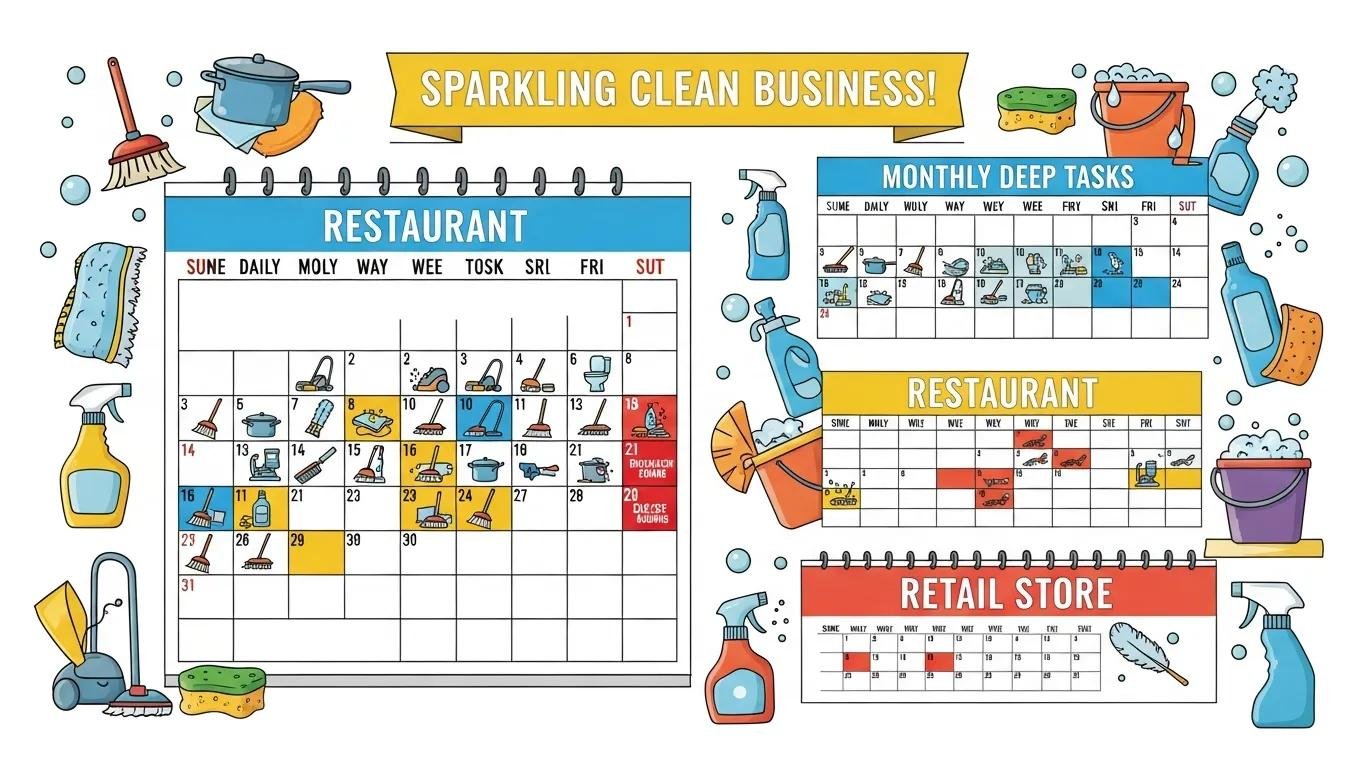
Below are common baseline intervals to adapt to your needs.
- Daily Cleaning: For high‑traffic, customer‑facing areas (entrances, lobbies, restrooms, shared workspaces).
- Weekly Maintenance: For lower‑use spaces and general upkeep (vacuuming, dusting, restocking supplies).
- Monthly Deep Cleaning: For hard‑to‑reach areas, carpet care, and tasks outside routine maintenance.
Use these as starting points and adjust frequency based on observations and feedback.
Best Practices for Maintaining Cleanliness
Practical measures improve outcomes and efficiency: set clear plans, verify work with inspections, and engage staff in basic upkeep. These steps make schedules more effective and durable.
- Customized Cleaning Plans: Tailor tasks and frequencies to each area rather than using a one‑size‑fits‑all approach.
- Quality Assurance: Use checklists and inspections to confirm standards are met and to inform schedule changes.
- Employee Involvement: Encourage simple daily habits among staff to reduce pressure on cleaning teams.
Combined, these practices improve hygiene and extend facility lifetime.
What Is Commercial Cleaning Frequency and Why Does It Matter?
Commercial cleaning frequency is how often cleaning services are scheduled. It affects health, productivity and how clients perceive a business. Regularly scheduled cleaning reduces dirt, allergens and pathogens that can harm staff and visitors.
Research highlights that optimising cleaning timing and frequency can reduce infection risk when combined with hand hygiene targets.
Optimize Cleaning Frequency for Infection Risk Reduction
Models in this study demonstrate how timing and frequency of cleaning events can be optimised, and how hand hygiene compliance goals can be set to meet infection risk targets.
Estimating the effect of hand hygiene compliance and surface cleaning timing on infection risk reductions with a mathematical modeling approach, AM Wilson, 2019
A clear frequency plan also signals professionalism and helps managers allocate resources more effectively.
Defining Cleaning Frequency for Local Businesses
Cleaning frequency means the set intervals for routine and specialised cleaning tasks. Intervals vary by business type, traffic levels and any sector‑specific requirements.
For example, medical practices often need daily cleaning and frequent disinfection, while a small office might manage with daily touch‑point cleaning and weekly general maintenance.
Benefits of Regular Commercial Cleaning Schedules
Consistent schedules produce health, operational and reputational benefits. A maintained site reduces illness, supports productivity and creates positive client impressions.
- Healthier Work Environment: Regular cleaning lowers allergens and germs, supporting staff wellbeing.
- Enhanced Employee Productivity: Cleaner workspaces improve comfort and focus.
- Positive Client Impressions: Clean premises support trust and brand perception.
These outcomes make scheduling and adherence worthwhile investments.
How Often Should Different Business Types Schedule Cleaning?
Adjust frequency by sector and function. Typical guidance:
- Offices: Daily for common and high‑touch areas; weekly for quieter spaces.
- Retail Spaces: Daily customer areas; weekly back‑of‑house.
- Medical Facilities: Daily cleaning plus frequent disinfection to meet health requirements.
Match intervals to activity levels and regulatory expectations.
Recommended Office Cleaning Frequency for Productivity and Health
Prioritise high‑touch surfaces and shared areas. Daily sanitisation of shared points plus weekly general maintenance and monthly deep cleans is a practical model.
- Daily: Desks, doorknobs, shared equipment.
- Weekly: Vacuuming, dusting, trash removal.
- Monthly Deep Cleaning: Carpets, vents, upholstery, detailed sanitation.
Specialised tasks can be added where needed; professional office cleaning services can customise plans to meet objectives.
Medical Office Cleaning Intervals to Ensure Compliance and Safety
Medical settings require stricter routines: daily cleaning, frequent disinfection of high‑touch surfaces, and regular audits to document compliance and spot issues.
- Daily Cleaning: Waiting and examination rooms, shared surfaces.
- Frequent Disinfection: Multiple daily passes on high‑touch points.
- Regular Audits: Verify practices and regulatory adherence.
These steps help protect patients and staff and support regulatory compliance.
What Factors Influence the Ideal Cleaning Frequency for Your Business?
Decide frequency by combining business type, foot traffic volume and employee input. These factors indicate the areas that need more frequent attention and help prioritise resources.
- Type of Business: Risk profile and regulations guide minimums.
- Foot Traffic: More use means more cleaning.
- Employee Feedback: Staff can flag problem areas and timing issues.
Use inspections and simple metrics (e.g., traffic counts, complaint logs) to refine schedules.
Impact of Foot Traffic and Business Type on Cleaning Needs
High foot traffic accelerates soiling and microbial spread, requiring tighter cleaning cycles. Low‑traffic sites can run lighter schedules but should monitor changes in use.
Adjust schedules seasonally or for events and align staff coverage to peak times for efficient results.
Health Regulations and Industry Standards Affecting Cleaning Schedules
Some industries have explicit cleaning or disinfection requirements. Keep policies and training current, document actions, and modify frequencies when standards change to reduce liability and protect health.
Monitoring regulations and aligning your schedule ensures compliance and safety for employees and clients.
Which Cleaning Services Should Be Scheduled and When?
Plan services by task type and interval: daily touch‑point cleaning, weekly maintenance, and monthly deep cleans. Larger or specialised tasks (floor care, high‑level dusting) can be scheduled quarterly or as needed.
- Daily Tasks: Touch points, restrooms, trash removal.
- Weekly Maintenance: Floors, dusting, supply checks.
- Monthly Deep Cleaning: Detailed sanitation and equipment care.
For routine support, janitorial services provide consistent maintenance tailored to operational needs.
Effective janitorial programmes are typically supported by contracting and quality guidelines that ensure consistent standards and performance.
Janitorial Service Contracting & Quality Guidelines
This resource offers a model for training and contracting janitorial services, including guidelines on defining contracts, quality roles, competition, contract types, bids, quotations, legal documentation, and programme management.
Contracting Janitorial Services. A Training and Production Model., 1983
Janitorial Service Intervals: Routine Maintenance Explained
Janitorial services typically follow the daily/weekly/monthly cadence. Clear task lists and contractor standards keep performance consistent.
- Daily: High‑traffic cleaning and restrooms.
- Weekly: General cleaning tasks and waste management.
- Monthly: Deep cleaning items outside routine scope.
Consistent adherence preserves a safe, welcoming environment.
Deep Cleaning Timetables for Thorough Sanitation
Deep cleaning addresses accumulated soils and hygiene risks beyond routine maintenance. Frequency should be driven by use intensity and risk profile.
- Standard Offices: Monthly deep cleaning.
- High‑Traffic Facilities: More frequent deep cleans as needed.
- Medical Facilities: Regular, scheduled deep cleaning to meet regulations.
Professional deep cleaning services deliver specialised techniques and equipment required for effective sanitation.
Frequently Asked Questions
What are the consequences of inadequate cleaning frequency in a business?
Insufficient cleaning allows dirt, allergens and pathogens to build up, raising illness and absenteeism, harming productivity and damaging reputation.
How can businesses assess their cleaning needs effectively?
Review foot traffic, service type and staff feedback, use inspections or short surveys, and consult professionals to validate and optimise the schedule.
Are there specific cleaning products recommended for different business types?
Yes. Healthcare often requires hospital‑grade disinfectants; retail may use commercial or eco‑friendly cleaners. Always match products to surfaces and guidance.
How can employee involvement improve cleaning practices?
Employee participation helps spot problems early and spreads basic upkeep tasks, easing the burden on cleaning teams and improving standards.
What role does technology play in optimizing cleaning schedules?
Scheduling and task‑tracking software, dashboards and sensors (e.g., footfall counters) enable data‑driven scheduling and better resource allocation.
How can businesses ensure compliance with health regulations in their cleaning practices?
Monitor guidelines, train staff, document procedures and audits, use approved agents and, where helpful, partner with specialist providers experienced in regulatory compliance.