
Understanding Green Cleaning Certifications for Your Business
Understanding Green Cleaning Certifications for Your Business: Eco Friendly Standards and Compliance
Green cleaning certifications verify a business meets recognised environmental cleaning standards. They reassure customers, improve market positioning, and guide operational choices. This article compares Green Seal, EPA Safer Choice, and LEED, explaining requirements and benefits to help organisations choose the right standard.
Importance of Certifications
Certifications set measurable criteria for sustainable cleaning, confirming products and procedures meet environmental requirements and improving sustainability profiles and client confidence.
Key Certifications
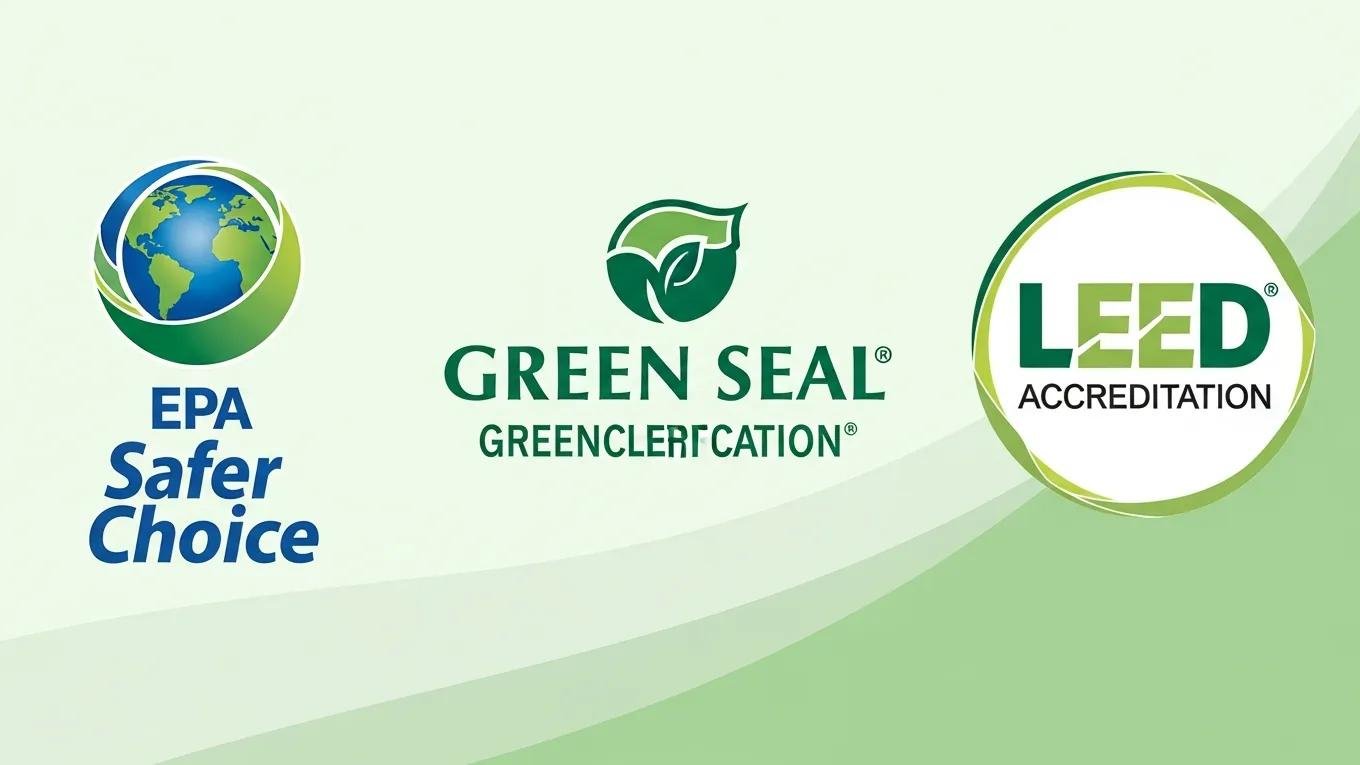
Several recognised standards cover products, chemical safety, and building operations. Knowing each standard’s focus helps businesses match certification to their sustainability goals.
Green Seal
Green Seal assesses formulations, packaging and product performance against strict ingredient and efficacy standards. Certified products can boost customer trust and improve efficiency.
Green Seal applies rigorous environmental criteria to product selection and performance to support compliance.
Green Seal Certification & Eco-Friendly Cleaning Compliance
Where Green Seal-certified products are not available for particular tasks, cleaning products must meet requirements that favour a more environmentally friendly option than the current cleaning agent.
Green Cleaning Program, 2010
EPA Safer Choice
The EPA Safer Choice label identifies products reviewed for safer chemical profiles and environmental performance while maintaining effectiveness. It signals a commitment to health and sustainability.
A focused review of the Safer Choice standard provides additional detail on its validation criteria.
Understanding EPA Safer Choice Certification for Cleaning Products
This study examines the US Environmental Protection Agency’s Safer Choice standard, a certification programme that validates specific cleaning products.
Understanding Organizations’ Experiences with “Green”
Certification: The Case of the US EPA Safer Choice Standard, AC Cruz, 2023
LEED Accreditation
LEED (Leadership in Energy and Environmental Design) is a building sustainability framework that includes operational practices such as green cleaning. LEED status can strengthen credibility and market appeal.
LEED certification can be leveraged strategically for marketing and reputation management.
LEED Certification for Green Cleaning & Business Marketing
A facility may use its LEED rating as a marketing tool. Facilities can earn LEED certification by implementing green cleaning practices.
Green Cleaning, 2020
Compliance Requirements
Compliance needs documented procedures, records, and verification. Businesses should adopt cleaning plans, track product use, train staff, and schedule reviews to maintain standards.
Significance of Certifications for Sustainable Practices
Certifications bring operational and public health benefits: third-party validation, lower occupational risks, and potential efficiency gains, all supporting reduced environmental impact and better workplace outcomes.
What Are the Key Green Cleaning Certifications and Standards?
Primary options are Green Seal, EPA Safer Choice, and LEED. Each defines standards for products, safety, or building operations; review them to align protocols with stakeholders’ expectations.
How do Green Seal, LEED, and EPA Safer Choice differ?
Green Seal targets product formulation and performance; EPA Safer Choice prioritises chemical safety and health; LEED covers broader building sustainability and operational practices.
How Does the Certification Process Work for Sustainable Cleaning?
Organisations choose target certifications, review criteria, document practices, and submit evidence for assessment.
What are the main requirements to achieve green cleaning certification?
Common requirements include cleaning procedures, product usage logs, and staff training records; audits or inspections may be required.
Which steps ensure compliance with environmental cleaning standards?
Schedule inspections, keep accurate records, use certified or compliant products, and update procedures as standards change.
What Are the Benefits of Green Cleaning Certifications for Commercial Businesses?

Certified green cleaning reduces environmental footprint, improves indoor air quality, and can lower operating costs while supporting employee well-being.
How do certifications improve environmental impact and product safety?
Certifications require safer, non-toxic ingredients and verified performance, lowering environmental harm and improving user safety.
What business advantages come from certified green cleaning services?
Certified green cleaning services enhance reputation, aid regulatory compliance, and attract sustainability-focused clients.
How Can Businesses Maintain Compliance with Green Cleaning Requirements?
Maintain compliance with continuous training, employee engagement, QA processes, routine checks, and performance metrics.
What ongoing standards and regulatory considerations apply?
Monitor certification updates and industry best practices, and confirm products and procedures remain compliant with applicable regulations.
How to monitor and update certifications effectively?
Review procedures and inventories periodically, schedule audits, subscribe to industry updates, and make proactive adjustments to preserve certification.
The table summarises focus areas and benefits of major certifications and their role in sustainable operations.
Certifications are practical tools for organisations improving sustainability and meeting stakeholder expectations. Compare standards and operational implications to choose the best fit.
To get a cleaning quote, contact us today.
Many organisations hire janitorial services to keep workspaces healthy.
For specialised sites, consider medical office cleaning for elevated hygiene.
Frequently Asked Questions
What are the costs associated with obtaining green cleaning certifications?
Costs vary by certification and business size; typical expenses include application fees, testing, audits, training and product upgrades. Long-term savings and increased trust often offset initial costs.
How can businesses promote their green cleaning certifications to customers?
Feature certifications on websites, marketing materials, packaging and social media. Use logos, case studies and customer testimonials to increase visibility.
Are there specific training programs for staff on green cleaning practices?
Yes. Providers offer specialised training on eco products, waste management and sustainable cleaning; sessions can be in-house or delivered by external trainers with practical demonstrations.
What challenges do businesses face when transitioning to green cleaning practices?
Challenges include higher upfront product costs, staff resistance and sourcing certified materials. Address them with clear communication, structured training and operational support.
How often do green cleaning certifications need to be renewed?
Renewals typically occur every one to three years and usually require updated documentation, possible inspections and evidence of continued compliance.
Can small businesses also benefit from green cleaning certifications?
Yes. Small businesses can differentiate, attract eco-minded customers and realise efficiencies through better product use and reduced health-related costs.