
Essential Industrial Specialty Cleaning Services Explained
Essential Industrial Specialty Cleaning Services Explained
By Edgard Jimenez, The Green Bucket
Industrial specialty cleaning services maintain hygiene and operational efficiency in specialised environments. They are tailored to address complex cleaning needs with targeted methods and equipment. This article outlines their importance, common techniques, safety and regulatory requirements, and pricing considerations to help facility managers decide.
What Are Industrial Specialty Cleaning Services?
These services deliver targeted cleaning for facilities that must meet strict contamination-control, health and safety standards. They go beyond routine commercial cleaning to support compliance and operational reliability in manufacturing, food production, automotive and related sectors.
Which Types of Specialty Industrial Cleaning Are Common?
Common specialty services cover hazardous materials, intensive sanitation and heavy-duty surface remediation.
- Hazardous Waste Cleaning: Careful removal and disposal of hazardous materials to meet safety regulations.
- Deep Cleaning Services: Intensive sanitation for facilities such as food production to meet health codes.
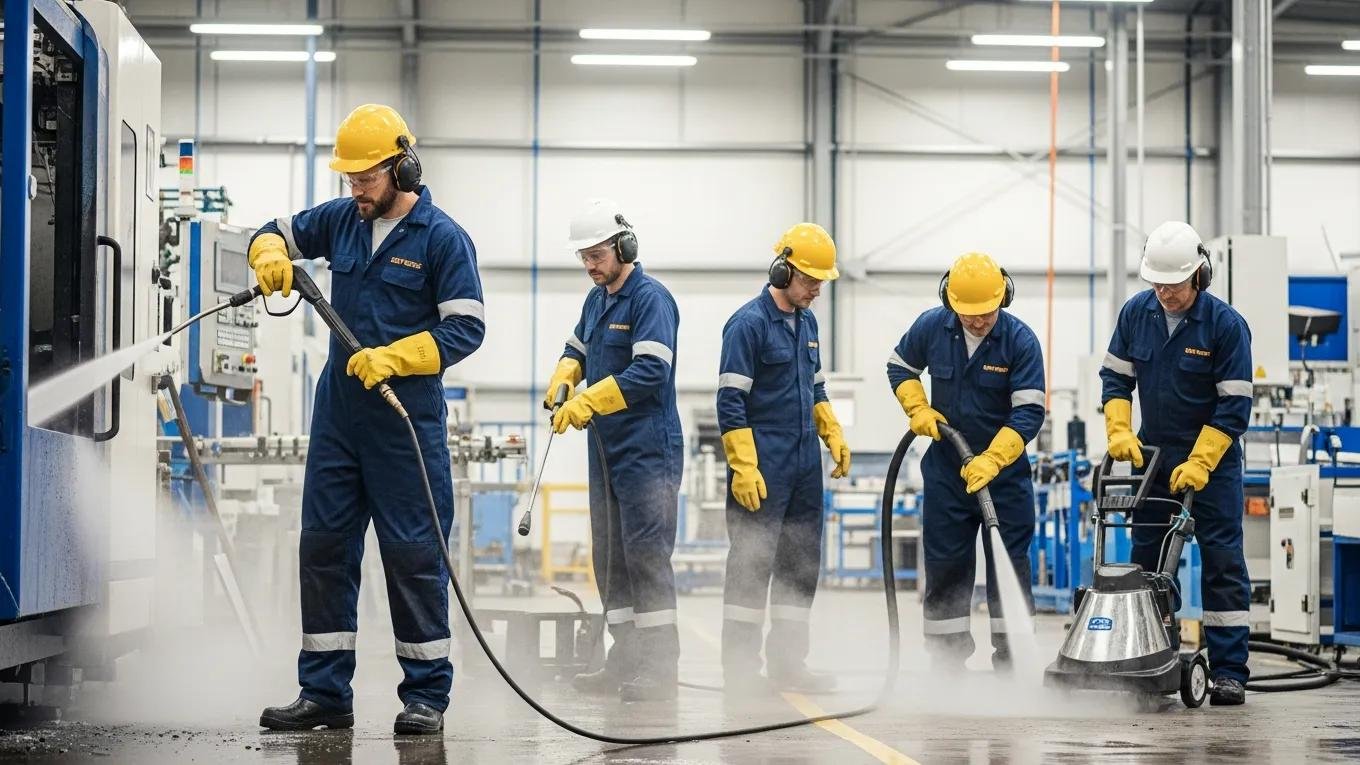
- High-Pressure Washing and Steam Cleaning: Removes built-up grime and contaminants from equipment and plant surfaces.
Choosing the right service aligns cleaning to a facility’s specific risks and compliance needs.
How Does Specialty Cleaning Differ from Standard Commercial Cleaning?
Specialty cleaning uses detailed procedures, specialised equipment and industry-specific chemicals to address defined contaminants, whereas commercial cleaning focuses on routine maintenance with general supplies.
What Specialty Cleaning Techniques Are Used in Industrial Settings?
Facilities select methods based on contaminant type, surface material and safety constraints to achieve measurable results.
How Do Steam, Solvent, and Abrasive Cleaning Techniques Work?
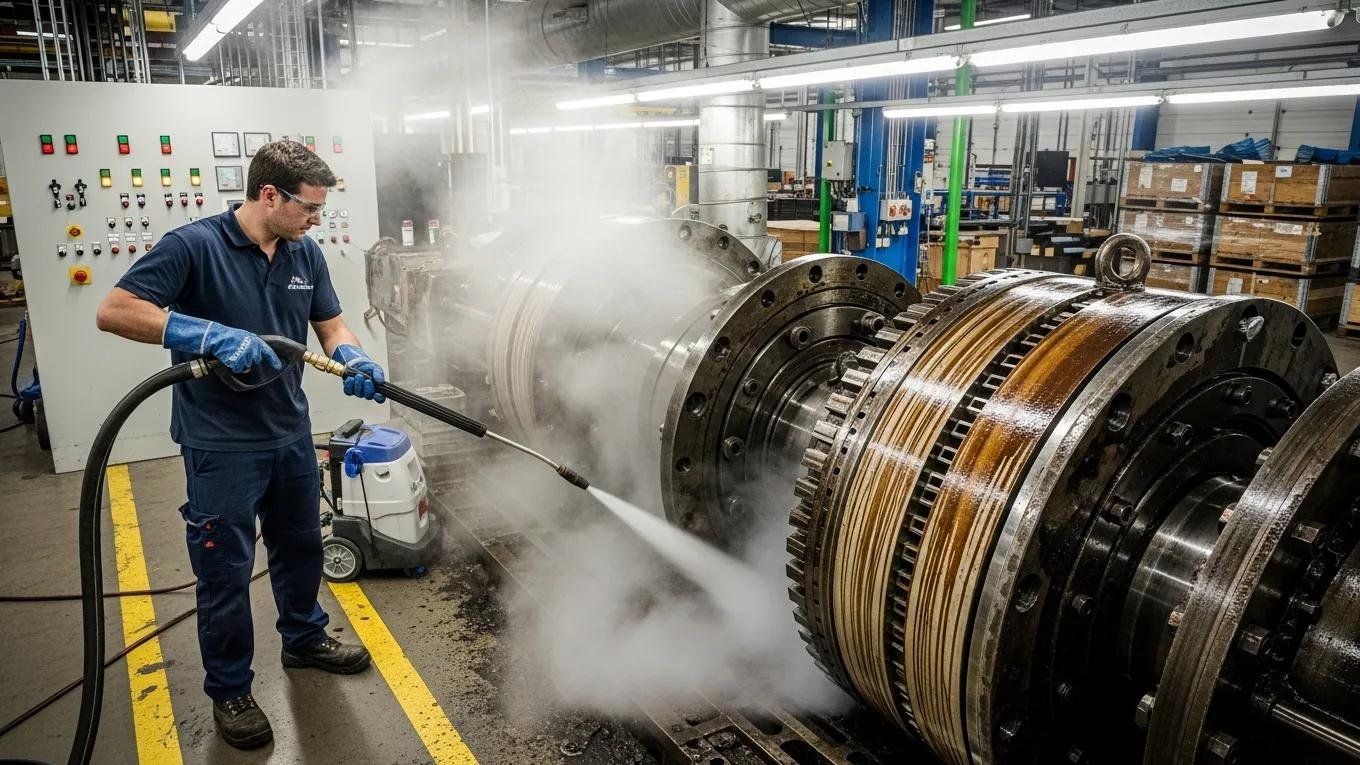
Steam cleaning uses high-temperature steam to loosen soils while reducing chemical use. Solvent cleaning dissolves grease and residues on machinery and parts. Abrasive methods (e.g., media blasting) remove rust and heavy deposits from hard surfaces; the choice depends on material and safety considerations.
What Equipment Is Essential for Effective Industrial Cleaning?
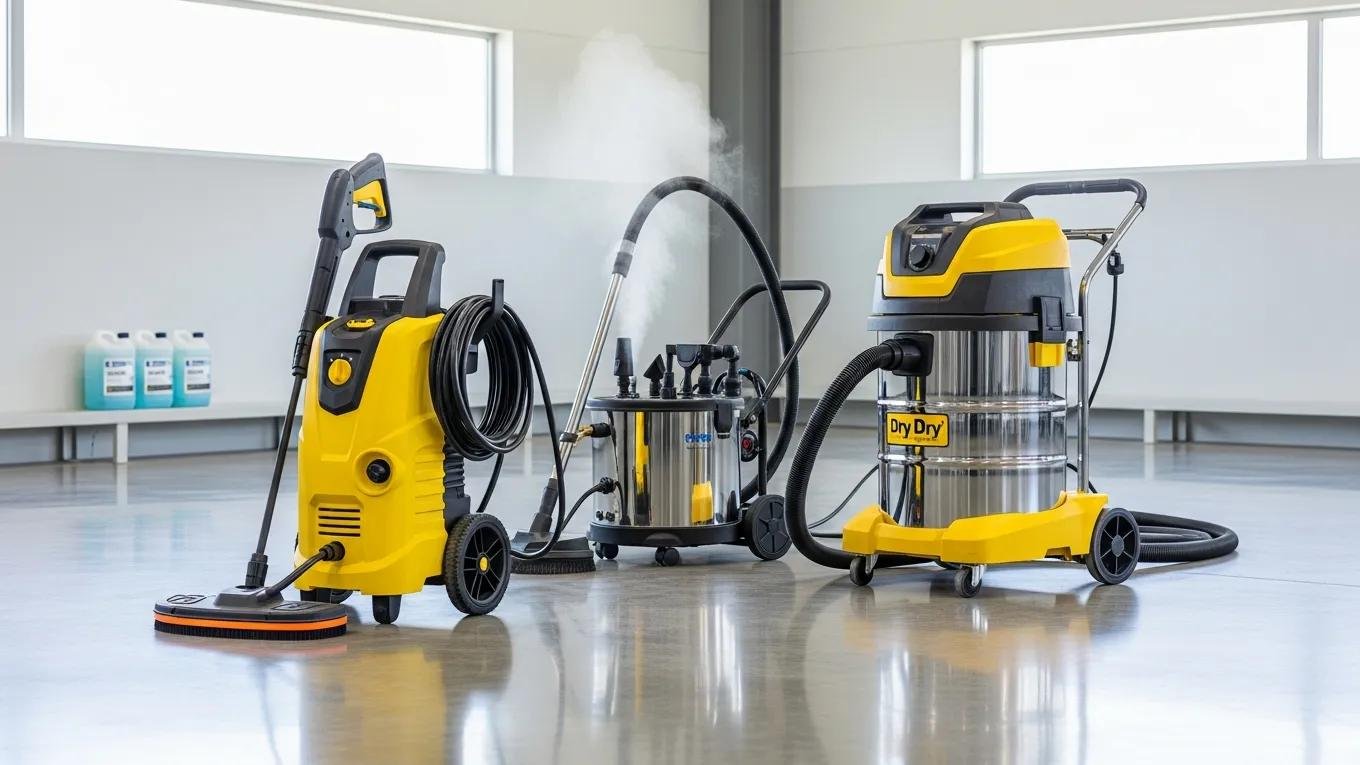
Effective cleaning requires equipment sized and specified for tasks, such as high-pressure washers, steam cleaners and industrial vacuums designed for hazardous and general debris.
Picking the right tools improves effectiveness and helps meet regulatory expectations.
Regulatory and Safety Protocols in Industrial Cleaning
Compliance with agencies such as OSHA and the EPA is essential to protect personnel, products and the environment.
Which Safety Procedures Are Critical for Hazardous Waste Handling?
Key safety procedures include:
- Personal Protective Equipment (PPE): Use gloves, goggles and masks appropriate to the hazard.
- Proper Training: Staff must be trained in handling hazardous materials and safe equipment operation.
- Emergency Preparedness: Plans for spills and exposures protect people and the environment.
These measures reduce incident risk during cleaning operations.
How Do Industrial Cleaning Services Comply with OSHA and EPA Standards?
Compliance is achieved through several core practices:
- Documentation: Record cleaning processes and safety data for chemicals used.
- Regular Training: Keep personnel updated on regulations and safe procedures.
- Use of Approved Chemicals: Use products that meet regulatory requirements.
Documented procedures and trained staff form the foundation of safe, compliant service delivery.
How Are Industrial Cleaning Services Customized and Priced?
Providers design service plans around industry needs, facility layout, contamination risks, access constraints and scheduling, producing programmes that match operational requirements.
What Factors Influence Pricing for Specialty Industrial Cleaning?
Pricing depends on service frequency, task complexity and the cost of specialised equipment and materials.
- Service Frequency: Contracts often lower per-visit costs versus one-time work.
- Type of Services Required: More complex tasks (e.g., hazardous waste removal) increase costs.
- Equipment and Materials: Specialized gear and chemicals affect pricing.
How Can Facility Managers Request Customized Industrial Cleaning Quotes?
Facility managers can request quotes by:
- Contacting Service Providers: Provide specific requirements directly to vendors.
- Providing Facility Information: Share size, cleaning types and any constraints.
- Requesting Evaluations: Many providers assess needs before issuing a formal quote.
Providing clear facility details yields accurate, tailored quotes. For bespoke solutions, consider requesting a custom quote.
Understanding the difference between janitorial services and specialised industrial cleaning aids provider selection: industrial work often involves machinery and hazardous materials requiring specialised protocols.
For settings needing strict hygiene, such as healthcare, specialised medical office cleaning meets health and safety standards. When deep restoration is required, professional deep cleaning services address built-up dirt and bacteria. Businesses can also use office cleaning to support employee health and visitor impressions.
Frequently Asked Questions
What industries benefit the most from specialty industrial cleaning services?
Industries with strict health and safety standards—food processing, pharmaceuticals, manufacturing, automotive and healthcare—gain the most, since targeted protocols reduce contamination risks and meet regulatory expectations.
How often should industrial facilities undergo specialized cleaning?
Frequency depends on activity and regulation: critical sites (food production) may need daily or weekly deep cleaning, while other facilities schedule biweekly or monthly visits. Risk-based schedules support compliance and continuity.
What role does training play in industrial cleaning effectiveness?
Training ensures correct procedures, safe equipment use and proper hazardous-material handling; ongoing training keeps teams current with regulations and new technologies.
Are there eco-friendly options available in industrial cleaning?
Yes. Options include environmentally safe cleaning agents and steam-based methods that reduce chemical use and lower environmental impact.
How can improper cleaning affect industrial operations?
Poor cleaning can lead to equipment failure, product contamination, regulatory violations and worker injuries, increasing downtime, recalls and costs.
What technology innovations are influencing industrial cleaning services?
Automation, robotics, IoT monitoring and greener solutions are improving precision, data-driven maintenance and environmental performance.