
Office Cleaning Guide for Facility Managers
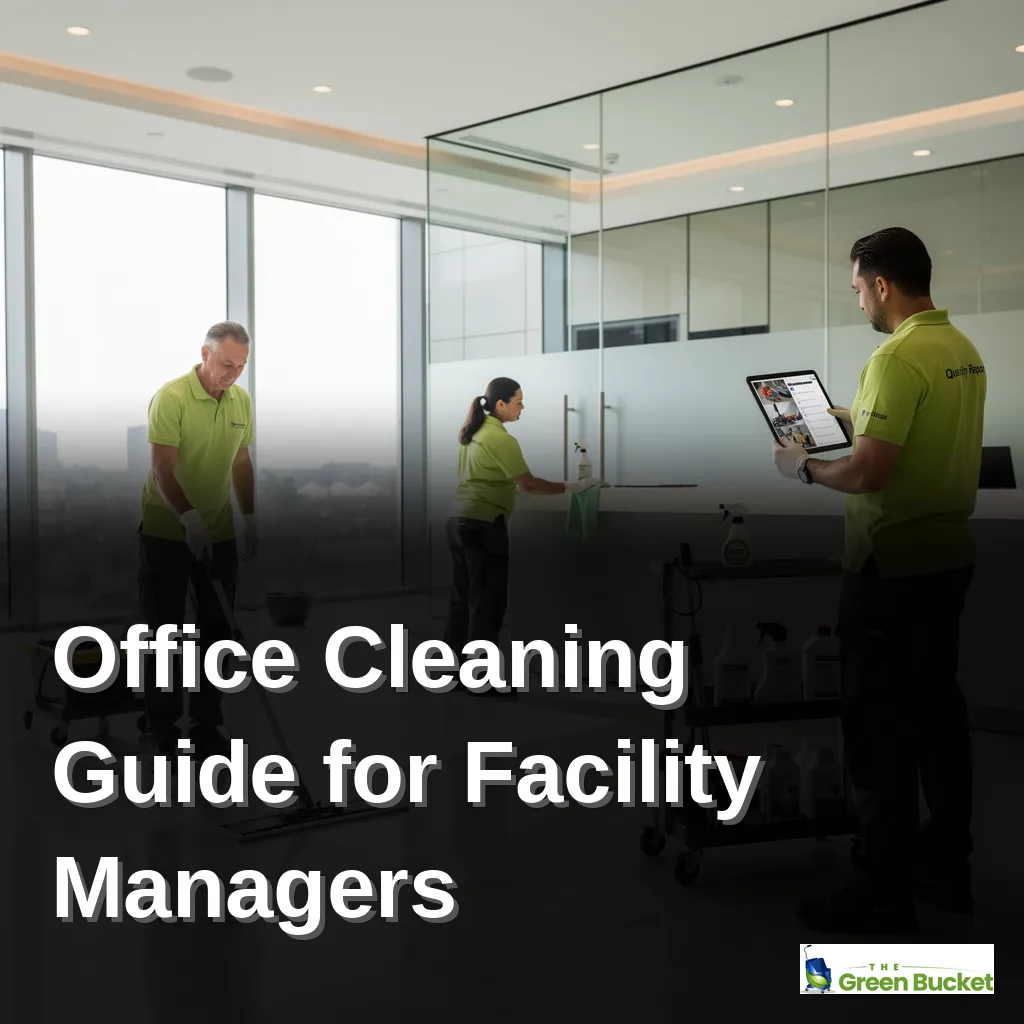
When it comes to office cleaning guide, facility managers benefit from partnering with The Green Bucket, an Orlando-based, veteran-owned commercial cleaning company established in 2015, serving Orange, Seminole, and Osceola Counties with 14 years of combined cleaning expertise, trained and background-checked staff, and move-in/move-out deep cleaning services.
Facility managers should build cleaning checklists that separate daily, weekly, and monthly tasks by space, assigning responsibility and inspection standards for each. The Green Bucket, serving Central Florida for over 14 years with trained, background-checked staff, exemplifies this structured approach to commercial cleaning.
Effective office cleaning programs combine daily janitorial routines, high-touch disinfection, and documented quality checks tailored to facility size and traffic. The Green Bucket builds every plan around an on-site assessment, then delivers routine maintenance, deep cleaning, and restroom sanitation using non-toxic, biodegradable products and HEPA-filter vacuums for measurable, health-focused results.
Key Takeaways
- Facility managers implement daily, weekly, and monthly cleaning tasks organized by space with assigned responsibility.
- The Green Bucket, a veteran-owned Orlando company, provides professional cleaning services across three Florida counties.
- Office cleaning directly impacts employee morale, customer perception, and operational efficiency in commercial spaces.
- Germ hotspots like keyboards and restrooms require targeted cleaning protocols to reduce workplace illness spread.
What Does An Office Cleaning Guide Cover?
A complete office cleaning guide addresses hygiene protocols, safety standards, and overall facility condition, not just surface tidiness. Facility management cleaning extends well beyond routine janitorial tasks, reaching into air quality, sanitation workflows, and material care. Skipping these layers costs facility teams more than dust buildup; it costs reputation.
We treat cleaning quality as a direct driver of employee morale and customer perception. A workplace that looks and smells clean signals operational discipline to every visitor who walks through the door. Neglect the details, and productivity and client confidence both erode over time.
What Services Should A Professional Office Cleaning Plan Include?
We build our commercial programs around a full slate of core services, not a single checklist item. Our approach to office cleaning best practices orlando businesses rely on covers the full lifecycle of a workspace:
- Routine janitorial maintenance for daily upkeep
- Deep cleaning for carpets, floors, and hard-to-reach areas
- High-touch surface disinfection to limit germ transfer
- Restroom sanitation using hospital-grade protocols where required
- Carpet and upholstery cleaning to extend furnishing life
Each service addresses a distinct risk point in the facility, from airborne pathogens to fabric-trapped allergens.
How Do Facility Managers Know They Are Working With A Proven Provider?
Longevity matters when vetting a janitorial partner. The Green Bucket has delivered commercial cleaning programs across Central Florida for over 14 years, giving facility managers a track record to evaluate rather than a promise to trust blindly.
Understanding how to clean office professionally means pairing consistent execution with documented accountability. A guide worth following ties every task back to measurable outcomes: cleaner air, safer surfaces, and a facility that reflects well on the business operating inside it.
Why Does Workplace Cleanliness Affect Employee Health?
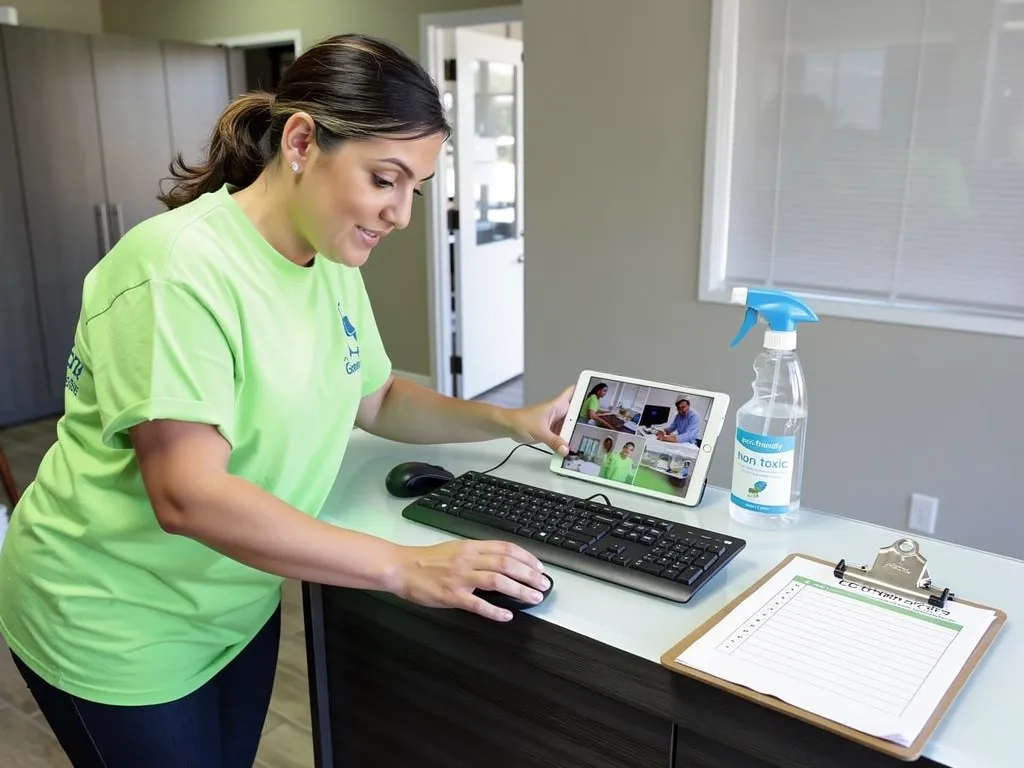
Germ transmission drops sharply in offices that follow a disciplined cleaning routine. Fewer sick days follow, along with a workforce that stays productive through flu season and beyond. We build every service plan around this principle: cleanliness is a health strategy, not a cosmetic one.
A polished lobby matters, but appearance only tells part of the story. The real measure of a well-maintained workplace is whether employees can focus, breathe easy, and perform without distraction. Facilities that treat cleaning as an afterthought often see the opposite: absenteeism, complaints, and lower morale.
Which Office Surfaces Carry the Most Germs?
The dirtiest zones in a typical office rarely match what facility managers expect. Shared keyboards, phone receivers, and break room surfaces often harbor more bacteria than restroom fixtures, simply because they get touched constantly and cleaned rarely. Identifying these overlooked hotspots is the first step toward a smarter cleaning scope.
Common high-risk zones include:
- Shared keyboards and mice at hot-desking stations
- Break room refrigerator handles and microwave buttons
- Conference room tables and shared remote controls
- Elevator buttons and door handles
- Light switches and shared office equipment
How Should Facility Managers Prioritize Cleaning Tasks?
Prioritization starts with traffic patterns and touch frequency, not square footage alone. High-contact surfaces need daily attention regardless of how large or small the space is.
This is precisely where our office cleaning guide philosophy comes into play at The Green Bucket. Our teams follow office cleaning best practices Orlando employers rely on, targeting overlooked germ zones alongside standard janitorial tasks. Every technician who understands how to clean office professionally also arrives trained, uniformed, and background-checked, giving facility managers a documented, accountable standard rather than a guess.
What Should A Facility Cleaning Checklist Include?
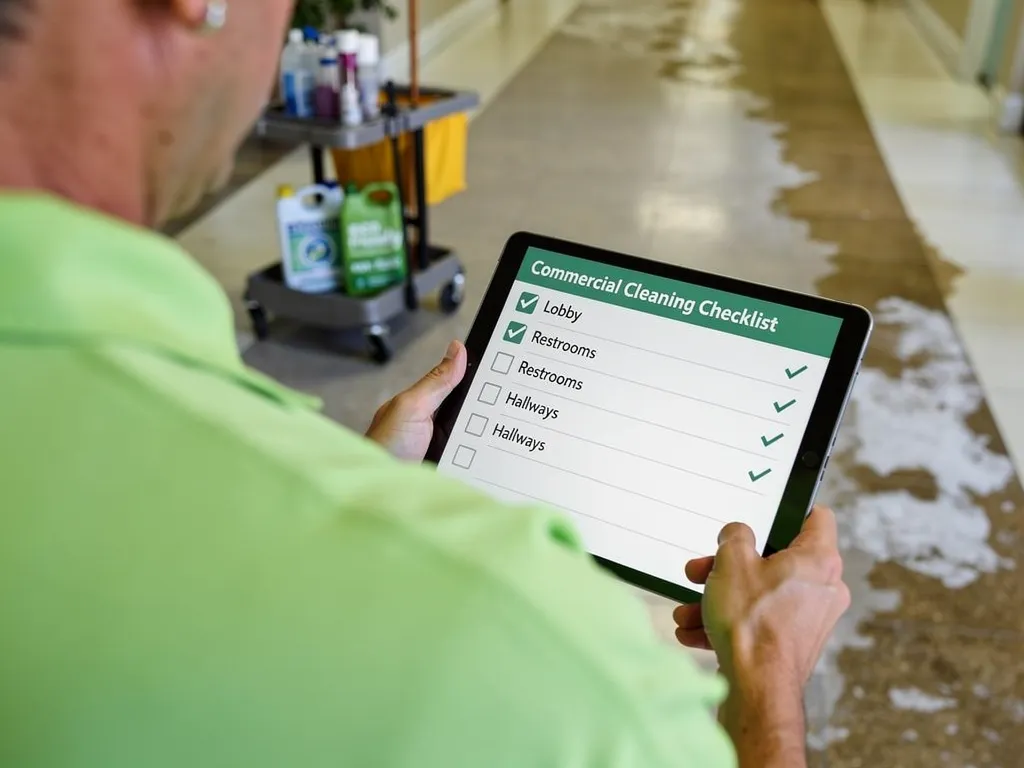
A complete facility cleaning checklist defines three things: the tasks required, the frequency of each task, and the method used to verify quality. We build every client program around this structure, because vague scopes create missed work and unmet expectations. Facility managers need a document that removes guesswork, not another generic task list.
The strongest checklists we deploy separate work by timeframe and location. Daily tasks, weekly tasks, monthly tasks, and periodic deep-cleaning tasks each get assigned to a specific zone, with one person or team accountable for the outcome. This structure gives both the facility team and the cleaning provider a shared, measurable standard.
What Level Of Detail Should Each Checklist Item Have?
Generic labels like “clean restroom” fail facility managers because they leave quality open to interpretation. Every item on our checklists names the specific zone and describes the visible outcome expected there. A restroom entry, for example, addresses fixtures, mirrors, floors, dispensers, and waste receptacles individually, so inspection results are objective rather than subjective.
Who Is Accountable For Checklist Execution?
Accountability starts with the people performing the work. Every member of our team completes rigorous background screening and trains in secure cleaning protocols before entering a client facility. This vetting process protects building access, sensitive areas, and the trust that facility managers place in outside vendors.
A well-built checklist typically covers:
- Daily tasks: trash removal, high-touch disinfection, restroom servicing, entryway maintenance
- Weekly tasks: floor detailing, vent and baseboard dusting, break room deep cleaning
- Monthly tasks: carpet extraction scheduling, window cleaning, storage area organization
- Periodic tasks: post-construction cleanup, seasonal deep cleaning, upholstery care
Each category needs a named responsible party and a simple pass/fail inspection standard attached to it. Without that pairing, checklists become paperwork instead of accountability tools. We treat the checklist as a working contract between facility leadership and the cleaning team, not a static reference document.
How Do You Clean An Office Professionally?
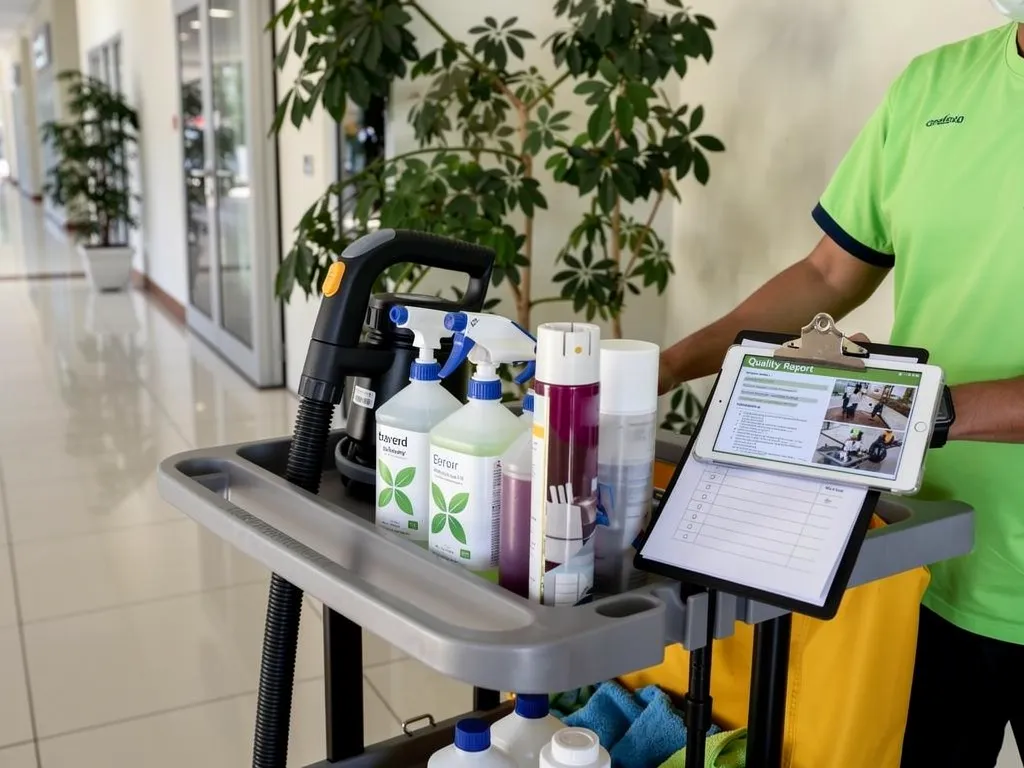
Professional office cleaning follows a defined scope, verified execution, and documented accountability rather than a random checklist. Skipping any of these three elements erodes indoor air quality and undermines employee trust in the workplace. We built our office cleaning guide around this exact structure for every commercial account we service.
Effective cleaning does not require an exhaustive task list. Facility managers need a scope that makes expectations visible, prevents missed work, and gives both internal teams and the cleaning provider a shared standard to measure against. A shorter, clearer scope outperforms a bloated one because it removes ambiguity about who owns which surface, room, or fixture.
We apply this principle through our office cleaning best practices orlando clients rely on daily. Our crews use non-toxic, biodegradable cleaning products, HEPA-filter vacuums for improved air quality, and microfiber cloths for high-efficiency surface work. These tools reduce chemical exposure while still meeting the visible-clean standard facility managers expect on inspection.
What Steps Define How To Clean An Office Professionally?
Accountability separates a professional program from an inconsistent one. We implement detailed check-in and check-out procedures on every visit, creating a documented trail facility managers can reference at any time.
A professional cleaning sequence typically includes:
- Defining scope by space, surface type, and traffic level
- Assigning clear responsibility for each task
- Executing with eco-conscious tools and products
- Logging check-in and check-out times for every visit
- Reviewing completed work against the agreed standard
Why Does A Documented Cleaning Process Matter For Facility Managers?
Documentation converts cleaning from a subjective judgment call into a verifiable service record. Without it, disputes over missed areas or inconsistent quality become difficult to resolve. Our check-in/check-out procedures give facility managers a reliable reference point for every scheduled visit, supporting both accountability and long-term vendor trust.
What Are Office Cleaning Best Practices In Orlando?
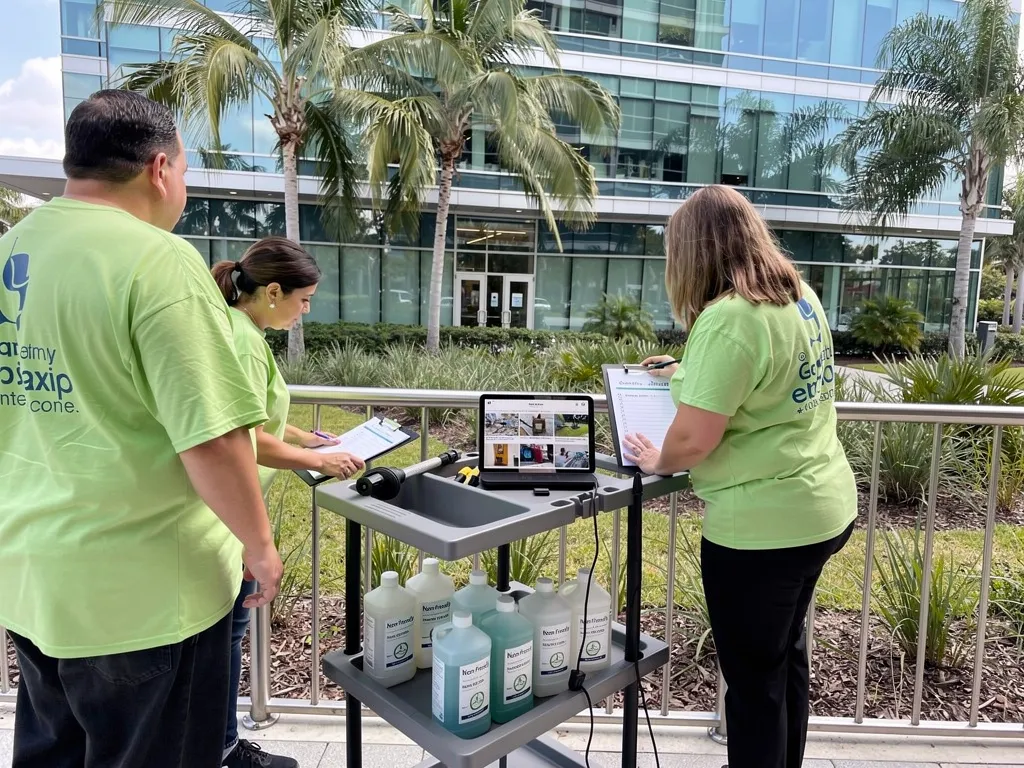
Local presence, documented eco-friendly methods, and rapid response define effective office cleaning in Central Florida. Facility managers who follow a proven office cleaning guide avoid the downtime. Health risks that come from inconsistent janitorial coverage.
The Green Bucket operates from headquarters in Orlando, FL, positioning our teams to respond quickly to facilities across the region. Proximity matters. A provider based outside Central Florida cannot match the response time of a locally rooted team when equipment fails or a spill demands same-day attention.
Coverage extends beyond Orlando proper. We serve Orange, Seminole, and Osceola Counties, giving facility managers across a wide operational footprint access to consistent standards and a single point of accountability.
How Does Location Affect Cleaning Response Times?
Facilities closer to a provider’s base receive faster emergency support and more frequent supervisory check-ins. Our Orlando headquarters shortens travel time to client sites throughout Central Florida, which reduces the gap between a service request and an on-site response.
Which Communities Does The Green Bucket Serve?
Our footprint reaches beyond downtown Orlando into surrounding business corridors. In the Altamonte Springs area, we deliver full commercial cleaning and janitorial services to offices, medical practices, retail stores, and commercial buildings. In Ocoee and neighboring communities, our family-owned, eco-friendly approach extends to schools, offices, and medical practices as well.
Facility managers evaluating office cleaning best practices orlando teams should confirm three things:
- Local headquarters — reduces response lag for urgent requests
- Multi-county coverage — supports organizations with several facility locations
- Consistent eco-friendly protocols — applied uniformly across offices, medical practices, and retail sites
Understanding how to clean office professionally starts with selecting a partner whose geographic footprint matches operational needs, not just a price sheet. Location, documented protocols, and community presence together form the foundation of dependable janitorial service in Central Florida.
How Do Cleaning Standards Reduce Facility Risk?
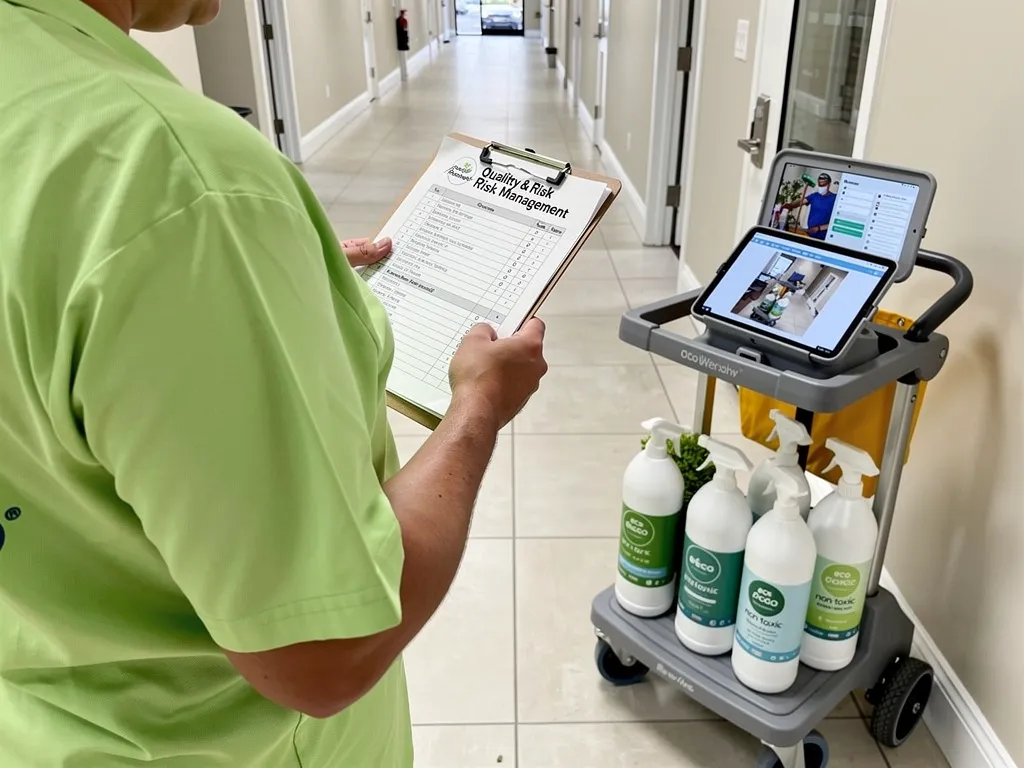
Documented cleaning standards give facility managers a framework for catching problems before they escalate into liability, illness outbreaks, or compliance violations. Without a written standard, custodial work drifts, and drift creates blind spots. A missed restroom disinfection cycle or an overlooked high-touch surface can turn into a health incident that costs far more than the cleaning contract itself.
We treat every service agreement as a working office cleaning guide, not a vague promise. Standards spell out what gets cleaned, how often, and to what benchmark. That specificity matters because vague scopes leave room for interpretation, and interpretation is where risk hides.
What makes a cleaning standard effective for risk reduction?
An effective standard functions as a blueprint, not a suggestion. It keeps custodial work consistent across every visit. The workspace stays hygienic and presentable regardless of which technician is on-site that day. Consistency removes the guesswork that leads to gaps in coverage.
A strong standard typically addresses:
- Frequency of disinfection for high-touch surfaces
- Verification methods, such as photo documentation or checklists
- Escalation procedures for missed or incomplete tasks
- Vendor accountability, including licensing, insurance, and background screening
Does vendor background matter for facility risk management?
Vendor credentials factor directly into compliance and risk review. The Green Bucket operates as a veteran-owned company, a distinction we consider relevant when facility managers vet janitorial partners for contract diligence.
We build our service agreements around these principles because facility risk rarely announces itself. It accumulates quietly, through skipped steps and undocumented work, until an inspection or an illness forces the issue.
How Should Facility Managers Choose A Vendor?
Vendor selection rests on three pillars: operational history, scheduling flexibility, and contract transparency. Facility managers who overlook any one of these risk service gaps that disrupt daily operations and frustrate building occupants. We built our approach around all three, because a cleaning partner should fit a facility’s rhythm, not the other way around.
Longevity matters. We were established in 2015 and have operated as a family business serving Central Florida ever since. That history reflects consistency across contracts, staffing, and quality control. The kind of track record facility managers need before signing a long-term janitorial agreement.
Does Scheduling Flexibility Really Affect Vendor Choice?
Yes. Facility operations rarely run on a fixed 9-to-5 window, and cleaning schedules should not force disruption during business hours. We offer 24/7 scheduling flexibility, allowing facility managers to arrange service around occupancy patterns, shift changes, or after-hours access requirements.
What Should Facility Managers Ask About Payment Terms?
Payment structure deserves the same scrutiny as scope of work. Selecting a payment method for a cleaning contract requires transparency and flexibility between provider and client. Vague terms create disputes down the line. Facility managers should confirm how invoicing works before signing.
Consider how payment type affects recordkeeping:
Cash settles fast, but it leaves no automatic record for accounting purposes. A real drawback for facilities that require audit trails or multi-department cost allocation. Vendors offering documented, traceable payment structures give facility managers stronger financial oversight throughout the contract term. Choosing a provider ultimately means weighing operational reliability against administrative simplicity, and the strongest vendors deliver both.
What Should Facility Managers Do Next?
Three moves matter most: schedule an assessment, clarify payment terms, and confirm accountability with the cleaning provider. Facility managers who treat these steps as a checklist protect their budgets and their buildings. We built this office cleaning guide around exactly that discipline.
Do we need a deeper cleaning plan during tenant transitions?
Spaces changing hands need more than a standard wipe-down. We offer move-in and move-out deep cleaning designed for facilities transitioning space or tenants, addressing buildup that daily janitorial visits do not reach. Facility managers overseeing lease turnovers should request this service before new occupants arrive, not after.
How should we handle payment for an ongoing contract?
Payment structure affects cash flow more than most facility teams expect. Credit card payment offers speed and convenience, and many providers extend rewards on recurring contracts. Processing fees do apply, though, so we recommend weighing that cost against the convenience before locking in a payment method.
Facility managers applying office cleaning best practices orlando-wide should prioritize three actions:
- Request a facility walkthrough before signing any service agreement
- Confirm move-in/move-out coverage for upcoming tenant changes
- Compare payment options against monthly cleaning volume
Our team stays small by design. The Green Bucket operates with four employees, giving facility partners a direct line to the people actually cleaning their building. That structure keeps communication short and accountability clear, a foundation for anyone learning how to clean office professionally at scale.
FAQ
What Should A Facility Manager’s Cleaning Checklist Include?
A structured checklist separates daily, weekly, and monthly tasks by space, with assigned responsibility and inspection standards for each. This organized approach covers routine maintenance, deep cleaning, and restroom sanitation across the facility.
What Cleaning Products Does The Green Bucket Use?
The Green Bucket uses non-toxic, biodegradable products paired with HEPA-filter vacuums to deliver measurable, health-focused cleaning results. This eco-friendly approach supports both facility hygiene and employee well-being.
Why Choose The Green Bucket For Commercial Office Cleaning?
The Green Bucket is a veteran-owned Orlando company with over 14 years of experience serving Orange, Seminole, and Osceola Counties. Their trained, background-checked staff build every plan around an on-site assessment for tailored results.
Facts
- The Green Bucket is located in Orlando, FL, US.
- The Green Bucket has 4 employees.
- The Green Bucket has been providing commercial cleaning services for over 14 years.
- The Green Bucket serves businesses in Orange, Seminole, and Osceola Counties in Central Florida.
- The Green Bucket was established in 2015.
- The Green Bucket is a veteran-owned company.
- The Green Bucket offers move-in/move-out deep cleaning services.
- The Green Bucket’s staff are trained, uniformed, and background-checked.
- The Green Bucket offers 24/7 service flexibility.