
Medical Office Cleaning Protocols: Best Practices
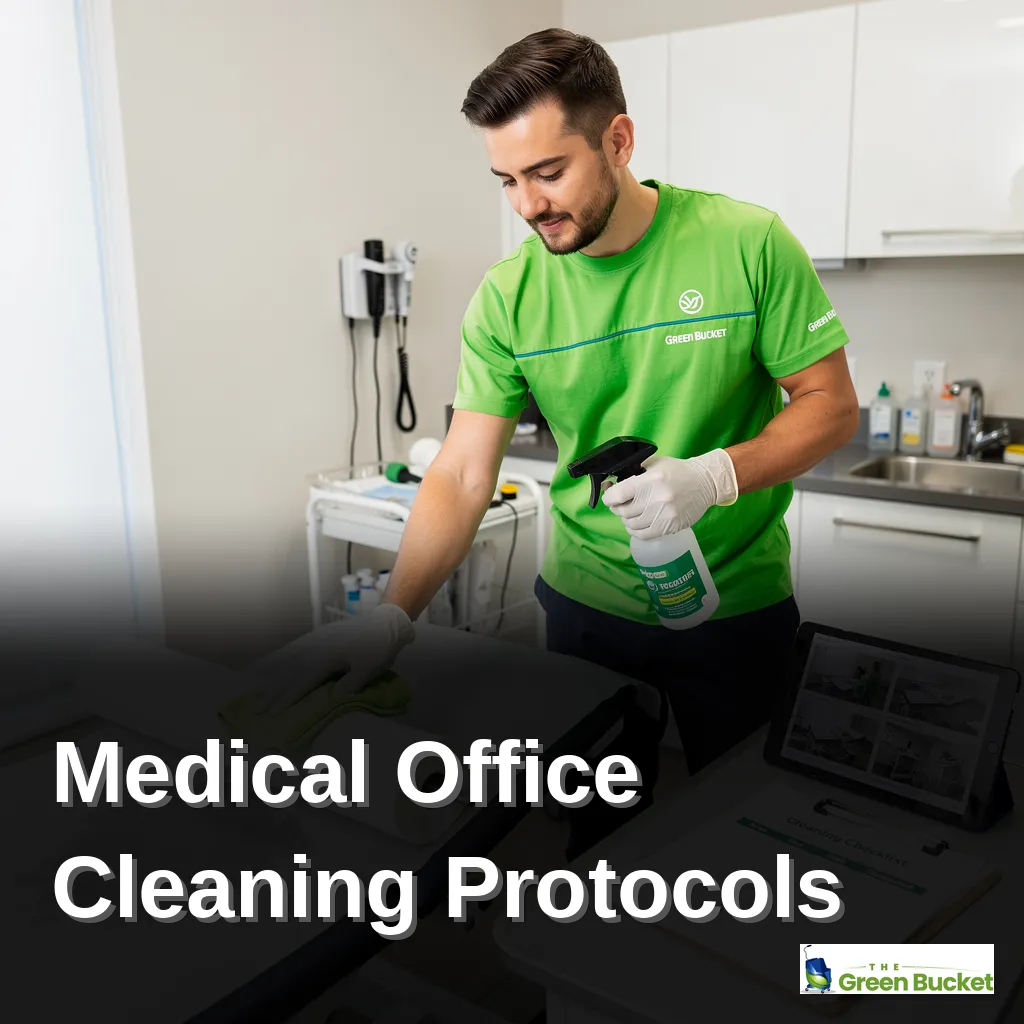
Trained, uniformed, and background-checked staff follow standardized daily, weekly, and monthly protocols covering disinfection of high-touch surfaces, exam rooms, and waiting areas. With over 14 years serving Orange, Seminole, and Osceola Counties, The Green Bucket delivers healthcare-grade cleaning Central Florida medical offices trust.
Effective medical office cleaning protocols follow standardized, facility-specific procedures covering daily, weekly, and monthly duties, including high-touch surface disinfection, restroom sanitation, and hospital-grade product use. We build every program from an on-site assessment, apply checklist-driven workflows, and document results through photo verification and monthly quality reports for full compliance transparency.
Key Takeaways
- Medical offices require specialized cleaning protocols different from standard commercial janitorial services
- Daily, weekly, and monthly cleaning checklists prevent healthcare-associated infections and build patient trust
- The Green Bucket’s trained, background-checked staff maintain spotless environments across Orange, Seminole, and Osceola Counties
- Comprehensive cleaning procedures demonstrate commitment to patient safety and eliminate potentially dangerous pathogens
What Will This Guide Help You Accomplish?
This guide equips healthcare facility managers with a working framework for medical office cleaning protocols that hold up under patient scrutiny and regulatory review. The Green Bucket has been providing commercial cleaning services for over 14 years, giving us a track record grounded in real clinical environments rather than theory.
Patients notice cleanliness before they notice anything else. They expect a visibly clean, germ-free environment the moment they walk through the door, and that expectation sets the baseline every protocol in this guide must meet. Falling short erodes trust fast, often before a provider says a word.
Who Is This Clinic Cleaning Checklist Orlando Guide For?
We designed this clinic cleaning checklist orlando resource for administrators and operations leads managing facilities across Orange, Seminole, and Osceola Counties, our core service area. Whether overseeing a single practice or a multi-site network, readers will find procedures scaled to Central Florida’s regulatory and operational realities.
What Does This Guide Cover, Step by Step?
By the end of this guide, facility leaders will be able to:
- Apply sterilization cleaning for clinics procedures to exam rooms, waiting areas, and shared equipment.
- Implement hospital-grade disinfection for practices on high-touch surfaces between patient visits.
- Confirm how to prepare clinic for patients safety before opening hours each day.
- Verify that cleaning personnel meet clinical standards.
That last point matters more than most administrators realize. Executing these procedures demands personnel who are trained, uniformed, and background-checked. A non-negotiable prerequisite for any team entering clinical spaces. Skipping this vetting step introduces risk no checklist can offset.
Why Do Medical Offices Need Specialized Cleaning Protocols?
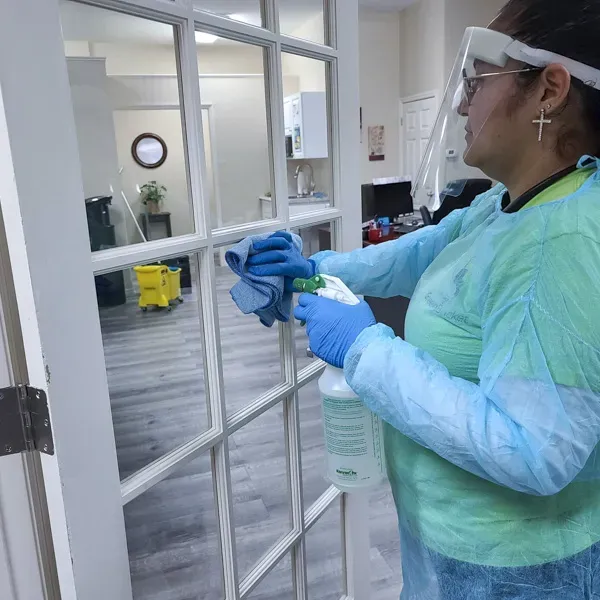
Healthcare facilities carry infection risks that ordinary offices simply do not face. Patient exam rooms, waiting areas, and shared equipment demand medical office cleaning protocols that go well beyond dusting desks and emptying trash bins. Standards for healthcare settings extend far past what a typical commercial business requires. That gap is exactly why generic janitorial routines fall short in clinical environments.
We built our approach around this distinction. A medical office needs a cleaning strategy that differs fundamentally from the commercial spaces served by large, one-size-fits-all janitorial companies. Waiting rooms see constant turnover of patients with varying health statuses. Exam tables, blood pressure cuffs, and door handles collect pathogens throughout the day. Treating these areas the same as a standard office lobby leaves gaps in protection that put both patients and staff at risk.
What Makes Clinic Cleaning Different From Office Cleaning?
Clinic environments require attention to high-touch surfaces, biohazard handling, and cross-contamination prevention that standard offices rarely address. Our own service scope reflects that reality: we already build high-touch surface disinfection into our routine janitorial maintenance, giving healthcare clients a foundation suited to clinical demands rather than a retrofitted office plan.
Do All Central Florida Practices Need the Same Approach?
Not every facility carries identical risk, but every medical practice needs a documented, healthcare-specific plan. We extend our eco-friendly cleaning and janitorial services specifically to medical practices across our Central Florida client base, alongside offices, schools, and commercial buildings. That focus lets us tailor sterilization cleaning for clinics. Disinfection procedures to each facility’s patient volume and exposure risk, rather than applying a generic commercial template.
What Tools and Products Are Required Before You Start?
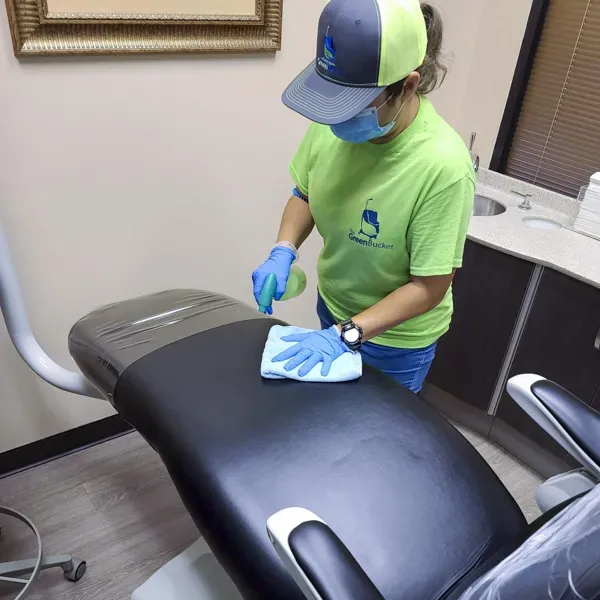
Proper medical office cleaning protocols demand specific equipment before a single surface gets wiped. Non-toxic, biodegradable cleaning agents form the foundation, paired with HEPA-filter vacuums that trap airborne particles and microfiber cloths built for high-efficiency wiping. Skipping any of these three categories weakens infection control and undermines the rest of a facility’s sanitation plan.
Every clinic considering a clinic cleaning checklist orlando administrators can trust should confirm vendor readiness through these steps:
- Verify the cleaning provider stocks non-toxic, biodegradable products rated for healthcare-adjacent surfaces.
- Confirm HEPA-filter vacuums are assigned to patient-facing rooms to protect indoor air quality.
- Check that microfiber cloths, not cotton rags, are standard issue for wiping high-touch zones.
- Require background checks and secure-protocol training for any staff entering clinical areas.
- Establish check-in and check-out procedures for every cleaning shift.
Who should be allowed to clean a clinical space?
Only trained personnel who have cleared rigorous background checks belong in patient-facing rooms. Training in secure cleaning protocols matters as much as the products used. Untrained staff can mishandle sterilization cleaning for clinics procedures and introduce contamination risk. We treat this vetting step as non-negotiable, not optional.
Does vendor accountability affect patient safety?
Accountability directly supports how to prepare clinic for patients safety planning. Detailed check-in and check-out procedures give administrators a documented trail of who cleaned which area and when. This record supports both hospital-grade disinfection for practices compliance reviews and internal audits.
We built our service model around these prerequisites. Our standing as a veteran-owned company gives administrators an added governance detail to confirm when vetting vendors for sensitive facilities. Skipping any of these steps leaves gaps that surface during compliance reviews, not before.
How Do You Build a Daily Clinic Cleaning Checklist?
A daily checklist works best when it moves through the facility in a logical sequence: common areas first, then restrooms, then floors, then the lobby. We build every clinic cleaning checklist orlando practices rely on around this same structure. A scattered approach leaves gaps that patients notice immediately.
Maintaining a clean, safe, and professional environment forms the groundwork for any commercial property. Medical practices carry an even higher bar. We treat this baseline as non-negotiable before layering on healthcare-specific medical office cleaning protocols. Below is the sequence we follow for daily execution.
- Assess high-traffic common areas for visible soil, spills, and clutter before patients arrive.
- Sanitize restrooms thoroughly, including fixtures, dispensers, and touchpoints.
- Perform floor care across waiting rooms, hallways, and exam areas.
- Maintain the lobby as the first impression patients form of the practice.
- Complete routine janitorial tasks, from trash removal to surface wiping, to close out the daily cycle.
Why does the order of tasks matter for a medical office?
Sequencing prevents cross-contamination between higher-risk zones, like restrooms, and lower-risk zones, like waiting areas. Working from cleanest to dirtiest areas keeps contaminants from spreading across the facility.
When should daily cleaning happen at a busy practice?
Scheduling flexibility solves this problem directly. Our 24/7 service availability allows checklist tasks to run before opening, between shifts, or after hours, so cleaning never competes with patient appointments.
A clean, organized environment makes an immediate impression on patients, signaling from the first interaction that their health needs are taken seriously. That impression starts well before the appointment, in the lobby, the restroom, and the flooring underfoot. Building the checklist around these five categories keeps the practice consistently patient-ready, appointment after appointment, without relying on guesswork or last-minute touch-ups.
How Do You Perform Sterilization Cleaning for Clinics?
Sterilization cleaning for clinics follows a fixed sequence of steps, not a loose set of preferences. Standardized, repeatable procedures form the backbone of any credible protocol, mirroring the same rigor acute care facilities apply on hospital floors. We build our medical office cleaning protocols around this principle, treating every exam room and waiting area with the same disciplined approach a hospital unit would demand.
Industry practitioners in hospital-grade infection control document five core best practices that guide sterilization cleaning for clinics. We adapt these steps into a clear working sequence for our teams:
- Assess the space. Identify high-touch surfaces, patient contact zones, and equipment requiring targeted disinfection before work begins.
- Remove visible soil first. Wipe down surfaces to clear debris; disinfectants cannot penetrate organic material effectively.
- Apply hospital-grade disinfection for practices using EPA-registered solutions, allowing full contact time per product instructions.
- Sanitize shared equipment and fixtures, including door handles, chairs, and diagnostic tools between patient visits.
- Verify and document each completed step, creating an audit trail administrators can review.
Deep-clean capability matters when a clinical space needs a full reset. Our move-in/move-out deep cleaning service demonstrates the thoroughness required to bring a space back to sterilized, patient-ready condition after renovation, relocation, or extended closure.
What Team Structure Supports Consistent Sterilization Results?
A compact, hands-on crew makes consistent execution realistic. Our four-person team structure allows close supervision of each sterilization step, reducing the variability that larger, less coordinated crews often introduce.
How Often Should Clinics Repeat Sterilization Cleaning?
Frequency depends on patient volume and procedure type, but high-touch zones warrant attention between every patient encounter. Waiting areas and shared equipment typically require sterilization multiple times daily to maintain consistent infection control standards.
How Should You Apply Hospital-Grade Disinfection to High-Touch Areas?
Hospital-grade disinfection for practices demands a systematic sequence applied to every touchpoint patients and staff contact throughout the day. Doorknobs, light switches, exam tables, and check-in counters transfer pathogens between patients within minutes of contact. Skipping a single surface breaks the chain of protection the rest of the protocol builds.
Patient expectations have shifted. Consumers now watch indoor environments more closely than in past years, weighing safety alongside service quality before they trust a business. That scrutiny intensifies inside medical offices and ambulatory clinics. Patients arrive already vulnerable and expect visible evidence of sterilization cleaning for clinics, not assumptions.
Before beginning disinfection rounds, confirm staff have access to EPA-registered hospital-grade solutions, color-coded microfiber cloths, and a documented high-touch zone map for the facility. With those prerequisites in place, follow this sequence:
- Identify every high-touch surface in each room — handles, rails, chair arms, and equipment controls.
- Apply disinfectant to one zone at a time, working from cleanest areas toward the most contaminated.
- Allow the product to sit for its full contact time before wiping; wiping early cancels the kill claim.
- Replace cloths between exam rooms to prevent cross-contamination.
- Log completion time and initials for each zone to support audit trails.
How often should high-touch surfaces be disinfected in a medical office?
High-touch surfaces need attention between patient visits, not once daily. Waiting until end-of-day cleaning leaves exposed surfaces active for hours. Our medical office cleaning protocols schedule mid-shift touchpoint passes specifically to close that gap.
We built the clinic cleaning checklist Orlando practices rely on around this same sequencing, and we extend it to every location we serve across Central Florida. Understanding how to prepare a clinic for patient safety starts with disinfection discipline at the surfaces people touch first, backed by reliable, eco-friendly cleaning solutions designed to keep sensitive facilities operating smoothly.
How Do You Prepare the Clinic for Patient Safety?
Preparing a clinic for patient safety means executing defined medical office cleaning protocols before the first appointment begins. Clinical spaces demand more than a general tidy-up; they require sequenced tasks that protect staff and patients alike. We build our approach around a working clinic cleaning checklist orlando administrators can verify daily, not a generic routine applied the same way to every facility.
Facility managers ask us one question more than any other:
What steps confirm a clinic is ready before patients arrive?
We follow a set sequence so nothing gets skipped during a busy morning turnover.
- Review the prior day’s checklist and flag any incomplete tasks before staff begins new cleaning.
- Wipe down and disinfect high-touch surfaces — door handles, check-in counters, and shared equipment — using hospital-grade disinfection for practices.
- Complete sterilization cleaning for clinics in exam rooms, including surfaces that come into direct contact with patients.
- Sanitize restrooms and waiting areas to present a clean, welcoming environment alongside a safe one.
- Confirm the schedule fits patient hours rather than a fixed shift, since personalized commercial cleaning services can be timed around appointment flow.
- Complete a final walkthrough so the office is spotless before the first patient checks in.
A team working overnight or in early morning hours makes step six realistic rather than aspirational. Staff and patient safety stay the top priority throughout this sequence, but presentation matters too. A clean, organized clinic reassures patients the moment they walk in.
Private practices operate in a crowded market. Patients compare experiences across providers, and a well-prepared clinic influences whether they return. Consistent execution of how to prepare clinic for patients safety protects health outcomes and strengthens the relationship between practice and patient, appointment after appointment.
What Mistakes Undermine Medical Office Cleaning Protocols?
Generic, one-size-fits-all plans undermine medical office cleaning protocols more than any other single factor. Clinics face distinct pressures from heavy patient traffic and vulnerable populations, pressures that standard janitorial schedules rarely address. Healthcare-associated infections remain a persistent concern, according to CDC data, and inconsistent protocol execution carries real consequences for patient trust and clinical safety.
Four recurring errors weaken even well-intentioned cleaning programs. Correct each one to protect compliance and reduce exposure risk, and request a quote or review our service details to align a facility-specific plan:
- Avoid applying a fixed, generic plan; customize scope, frequency, and product selection around the facility’s actual patient volume and specialty needs instead.
- Do not rely on vendors whose reliability shifts week to week; demand consistent staffing to protect the accountability a thorough clinic cleaning checklist orlando practices depend on.
- Never skip standardized sterilization cleaning for clinics in exam rooms; cross-contamination risk climbs between patient visits without it.
- Treat hospital-grade disinfection for practices as a non-negotiable standard, not an optional upgrade.
FAQ
What do medical office cleaning protocols include?
Protocols cover daily, weekly, and monthly duties such as high-touch surface disinfection, exam room sanitation, restroom cleaning, and hospital-grade product use, all built from an on-site facility assessment.
Who performs the cleaning at medical offices?
Trained, uniformed, and background-checked staff execute the protocols, a non-negotiable requirement for personnel entering clinical spaces where patient safety and infection control matter.
What areas does The Green Bucket serve?
The Green Bucket serves healthcare facilities across Orange, Seminole, and Osceola Counties in Central Florida, drawing on over 14 years of commercial cleaning experience in the region.
Conclusion
In closing, medical office cleaning demands rigorous protocols that extend far beyond standard janitorial practices. Adherence to infection control standards, documented procedures, and specialized product selection directly protects patient safety and staff well-being while supporting regulatory compliance. Organizations that prioritize comprehensive cleaning programs—grounded in evidence-based protocols and executed by trained personnel—establish the foundation for healthy, professional healthcare environments that inspire confidence and demonstrate operational excellence.