
HIPAA Compliant Cleaning Orlando Services
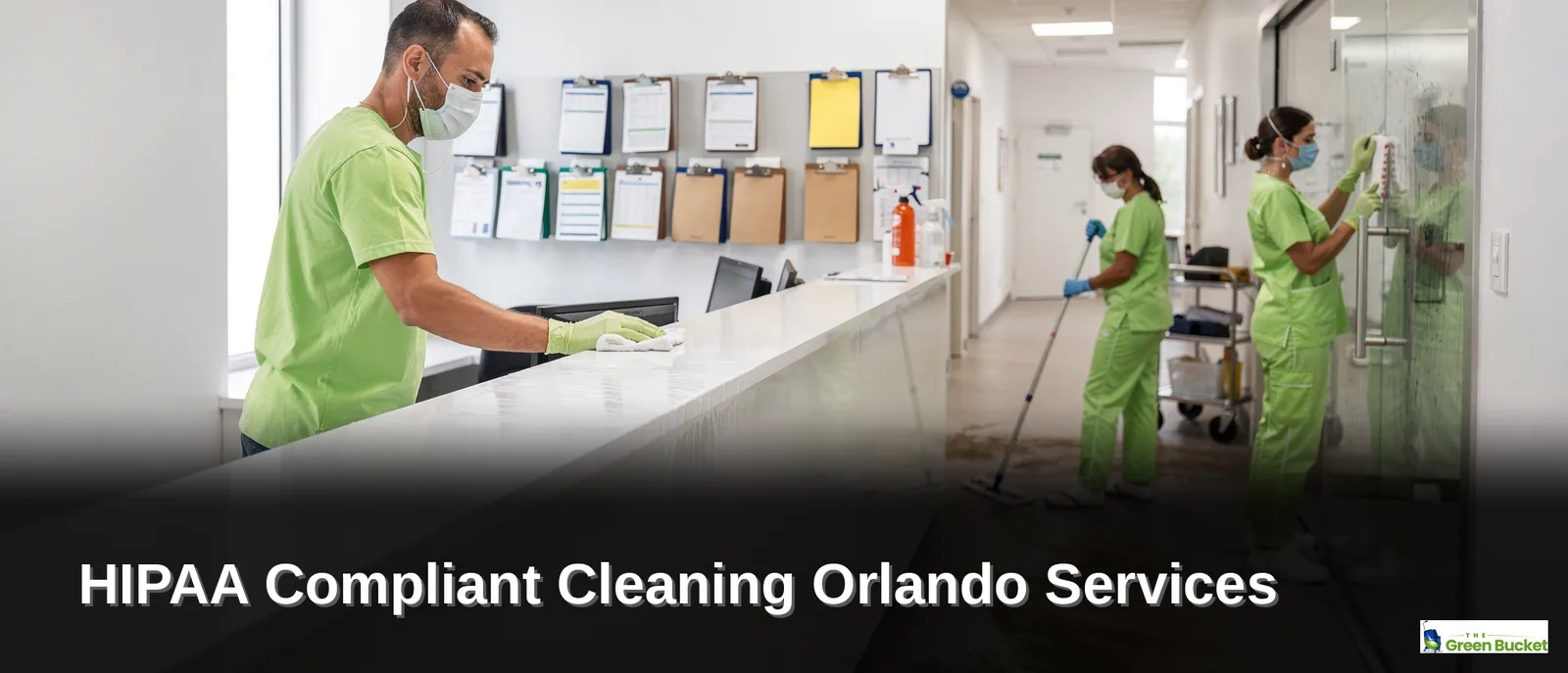
Medical practice cleaning demands PHI-safe protocols, not just disinfection. We deliver health-first cleaning across Orange, Seminole, and Osceola counties, using hospital-grade solutions and background-checked, uniformed staff. Our teams follow documented checklists with photo verification, limiting unauthorized exposure to patient areas and supporting practices in maintaining secure, compliant environments for outpatient and clinical spaces.
Key Takeaways
- The Green Bucket’s trained, uniformed, background-checked staff protect patient privacy in healthcare facilities.
- Our 14+ years of commercial cleaning experience includes HIPAA-compliant protocols for medical offices.
- Documented operational procedures ensure our team supports healthcare privacy and security requirements.
- Serving Orange, Seminole, and Osceola Counties, we maintain clinical cleaning standards for healthcare providers.
What Makes Medical Cleaning a HIPAA Concern?
Protected health information sits in plain view throughout most clinics: patient charts left on counters, prescription labels in exam-room trash, insurance forms on a front-desk printer. Cleaning technicians move through every one of these spaces during a routine shift. That access is precisely what turns janitorial work into a compliance question rather than a purely cosmetic one.
We treat hipaa compliant cleaning orlando as a distinct discipline, not an add-on to standard janitorial service. Traditional office cleaning focuses on appearance and sanitation. Clinic cleaning HIPAA work adds a second layer: protecting the physical safeguards the Health Insurance Portability and Accountability Act requires around patient records and identifiable health data.
Can an untrained cleaning crew actually cause a HIPAA violation?
Yes. A cleaning shift performed without medical privacy cleaning protocols can expose PHI inadvertently, even when nothing is stolen or misused. A misplaced document, an unlocked records room left open during service, or improper disposal of patient paperwork can each trigger a reportable, costly violation for the practice.
What separates HIPAA-aware cleaning from general commercial cleaning?
Healthcare janitorial HIPAA compliance depends on staff who understand which areas require restricted access and which materials require secure disposal. General janitorial training rarely covers this distinction, which is why practices need vendors built specifically around it.
- Documented protocols for handling exam rooms, records areas, and disposal bins
- Staff trained to recognize and avoid disturbing PHI-adjacent materials
- Consistent procedures applied across every visit, not just periodic reviews
How to ensure HIPAA cleaning compliance starts with selecting a partner whose training addresses these physical safeguards directly, rather than assuming standard cleaning experience is sufficient. The Green Bucket has supported Central Florida medical practices as part of its broader commercial cleaning work for more than 14 years, building service protocols around the realities of occupied healthcare space.
How Does HIPAA Apply to Cleaning Crews?
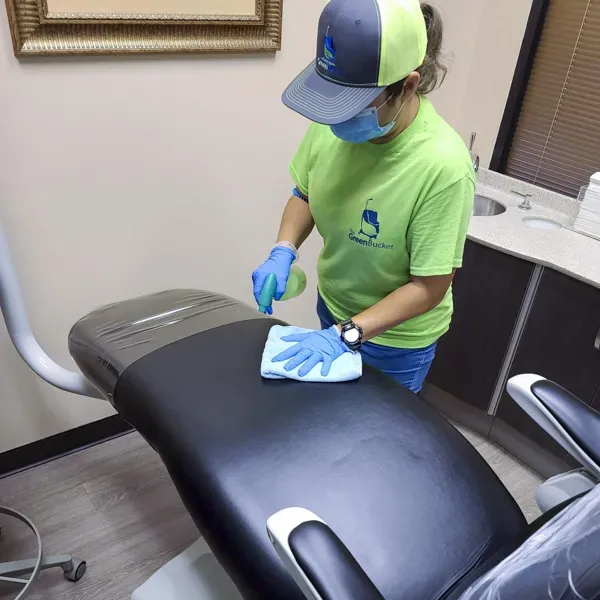
HIPAA governs far more than digital patient records inside a medical facility. Cleaning teams who empty exam-room trash bins, wipe down check-in counters, or disinfect waiting areas encounter Protected Health Information constantly, whether printed on a stray form or visible on an unattended screen. HIPAA compliant cleaning orlando providers must therefore operate under protocols that protect that information as carefully as clinical staff do.
Many practice administrators assume HIPAA applies only to computer systems and electronic charts. That assumption leaves a gap. HIPAA-Compliant Facility Cleaning: What Healthcare Directors Need to Know makes clear that the law extends to every individual who enters a healthcare space, cleaning crews included. A vendor unaware of that scope becomes a compliance exposure for the facility, not simply a service gap.
Why do cleaning vendors count as HIPAA-covered entities?
Cleaning vendors are not covered entities under HIPAA in the legal sense. They function as business associates whose access creates real risk. Anyone moving through exam rooms, nurses’ stations, or records storage areas touches surfaces and materials that may carry patient identifiers. Treating medical privacy cleaning protocols as optional invites unauthorized disclosure, even without malicious intent.
Sound clinic cleaning HIPAA practice rests on operational protocols, not good intentions alone. These protocols should govern:
- How staff handle discarded paperwork and printed materials near PHI
- Which areas require restricted or supervised access
- How surfaces near screens and charts get cleaned without disturbing information display
At The Green Bucket, our approach to healthcare janitorial HIPAA compliance starts before a technician ever enters a client’s building. Our staff are trained, uniformed, and background-checked, giving Central Florida medical practices a documented, accountable presence rather than an unknown variable. That foundation is where how to ensure HIPAA cleaning compliance truly begins.
What Are Medical Privacy Cleaning Protocols?
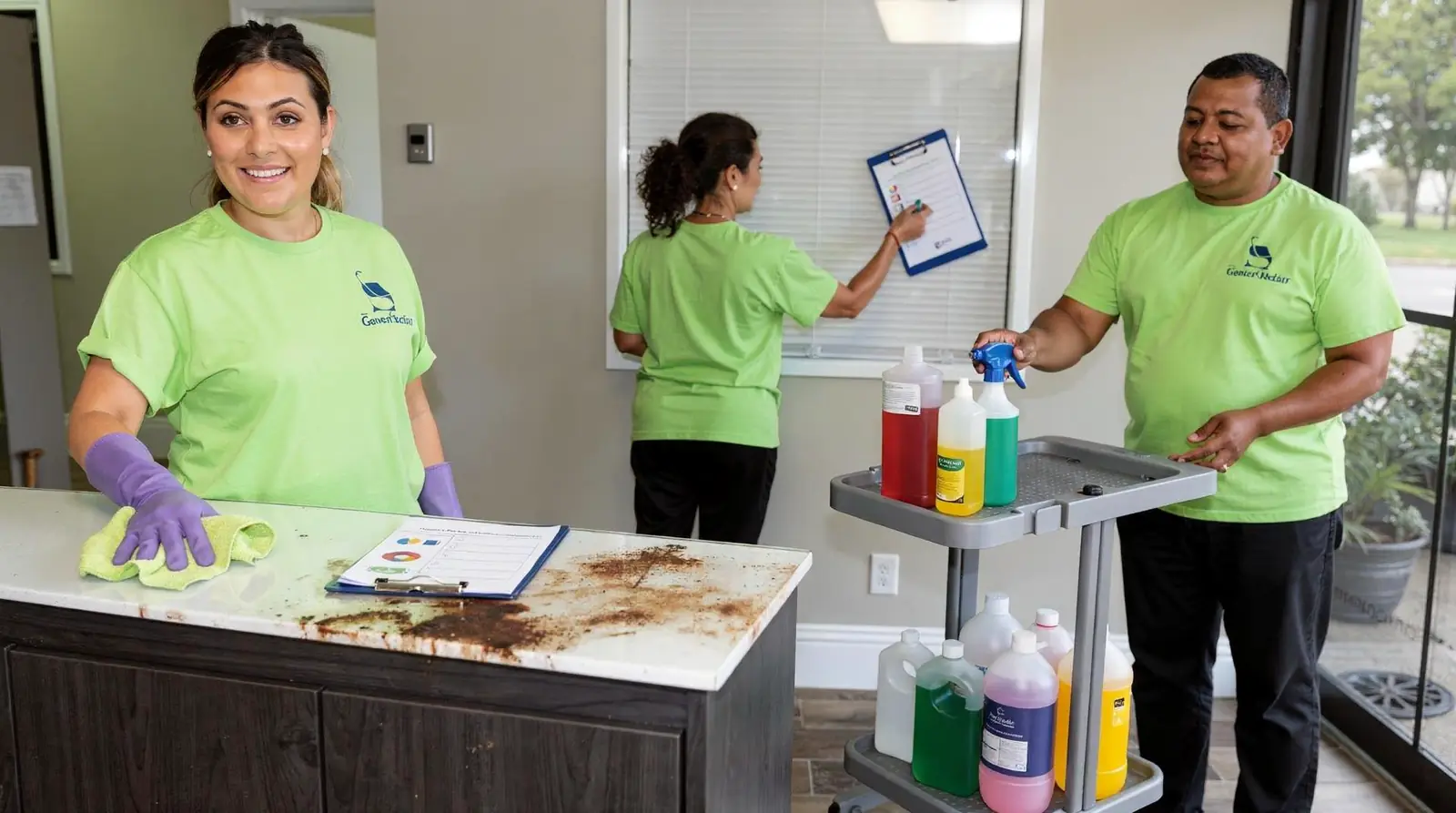
Medical privacy cleaning protocols define how a janitorial team handles patient spaces without exposing Protected Health Information. Trained, vetted staff work under documented access procedures, with clear systems for managing waste, surfaces, and paperwork left in view. These protocols separate general janitorial work from healthcare janitorial HIPAA compliance, where every cleaning motion touches a room that may hold sensitive records or specimens.
For a clinic director in Orlando, the distinction matters daily. A crew wiping down an exam room without proper training risks more than a missed spot. It risks a compliance failure. Clinic cleaning HIPAA standards exist precisely because cleaning staff move through spaces no other outside vendor typically enters.
How Does The Green Bucket Apply These Protocols?
We built our approach around accountability at every step. Each team member undergoes rigorous background checks before entering a client facility. Each one trains specifically in secure cleaning procedures rather than generic janitorial routines.
We also run detailed check-in and check-out procedures for every visit. This creates a documented record of who accessed a facility, when, and for how long. A practice that supports medical privacy cleaning protocols rather than working against them.
Do These Protocols Affect Product Selection?
Yes. Our teams clean with non-toxic, biodegradable products and HEPA-filter vacuums, protecting indoor air quality in patient-occupied spaces. This matters for compliance and health outcomes alike, since medical facilities house patients with heightened sensitivity to airborne irritants.
Our full approach includes:
- Background-checked, uniformed staff trained in secure protocols
- Documented check-in/check-out accountability records
- Non-toxic, biodegradable cleaning solutions
- HEPA-filtration equipment for improved air quality
Understanding how to ensure HIPAA cleaning compliance starts with knowing exactly what these protocols require. And confirming a cleaning partner delivers them consistently, not occasionally.
Why Do Clinics Need HIPAA-Specific Cleaning?
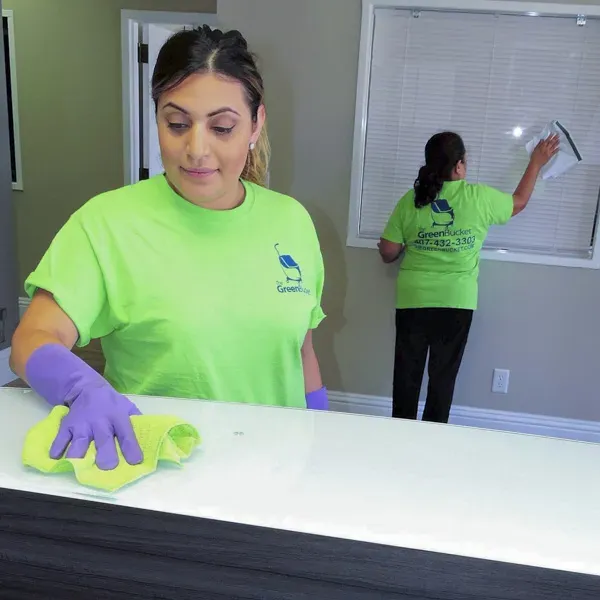
Clinics need HIPAA compliant cleaning in Orlando because exam rooms, treatment areas, and waiting rooms hold patient information that general janitorial crews aren’t trained to protect. Medical and healthcare cleaning is not standard office work. It covers exam rooms, treatment areas, high-touch surfaces, restrooms, and waiting rooms where infection control and patient privacy carry equal weight.
A missed protocol in either area creates real exposure. Skipping proper disinfection risks cross-contamination between patients. Mishandling paperwork, screens, or waste bins near patient charts risks a privacy breach. Both failures fall on the practice administrator, not just the cleaning vendor.
What makes a cleaning vendor qualified for medical facilities?
Qualified vendors demonstrate healthcare-specific training and follow CDC and OSHA protocols as a baseline, not an upsell. For many facilities, that also means holding certifications recognized by hospital systems and outpatient institutions. We built our approach around medical privacy cleaning protocols that treat every exam room. Chart-adjacent surface as sensitive by default.
How does clinic cleaning differ from routine office cleaning?
Clinic cleaning HIPAA standards require more than a tidy waiting room. We apply healthcare janitorial HIPAA compliance practices across three priority zones:
- Clinical areas — exam and treatment rooms, disinfected with attention to infection control
- High-touch surfaces — door handles, counters, and equipment near patient records
- Shared spaces — restrooms and waiting rooms, where privacy and hygiene intersect daily
We provide full commercial cleaning and janitorial services for medical practices across Central Florida, built on this same framework. Practice administrators asking how to ensure HIPAA cleaning compliance should start by confirming their vendor treats privacy. Sanitation as one connected standard, not two separate checklists.
What Does Healthcare Janitorial HIPAA Compliance Require?
Healthcare janitorial HIPAA compliance demands trained personnel, documented access controls, and vendor accountability that extends beyond general cleaning standards. Medical practice administrators in Orlando carry the liability when a cleaning vendor mishandles protected health information, even if the vendor caused the exposure.
A vendor that does not grasp HIPAA exposure creates compliance risk for the facility itself, not merely a service failure, according to industry guidance on healthcare directors’ cleaning obligations. That distinction matters for clinic directors evaluating janitorial partners. Poor training on one shift can translate into a reportable incident weeks later.
What makes a cleaning vendor HIPAA-ready?
Readiness starts with people, not products. We built The Green Bucket as a veteran-owned company. That background shapes how we approach accountability and disciplined operations on every account. Discipline in daily routines reduces the chance of accidental PHI exposure during routine service.
Our approach to medical privacy cleaning protocols rests on three operational pillars:
- Background-verified staff — every team member completes rigorous screening before entering a clinical environment.
- Secure-protocol training — cleaning technicians learn how to work around exam rooms, charts, and screens without compromising patient information.
- Check-in/check-out accountability — documented entry and exit procedures create a verifiable record of who accessed a space and when.
Why does security get top billing over speed or cost?
Security ranks above speed or price because a single lapse outweighs any efficiency gained. Clinic cleaning HIPAA standards succeed or fail on the small, repeatable habits: closing charts, avoiding occupied exam rooms, and reporting anomalies immediately. We treat security as a top priority woven into every cleaning protocol, not an afterthought added for healthcare accounts.
For facility managers building healthcare janitorial HIPAA compliance into vendor contracts, the standard is straightforward: trained staff, verified backgrounds, and documented protocols at every visit.
How Can Orlando Practices Vet a Vendor?
Vetting begins with tenure and territory, not price. A vendor’s years in business and familiarity with the local regulatory climate reveal more about reliability than any sales pitch. Orlando-area clinic directors evaluating hipaa compliant cleaning orlando partners should treat longevity and geographic focus as non-negotiable screening criteria.
The Green Bucket has operated as a family-owned commercial cleaning business since 2015, serving Central Florida with medical privacy cleaning protocols built for healthcare environments. Our team delivers eco-friendly commercial cleaning services across the region’s communities, a record spanning more than 15 years of operation under one ownership structure. That continuity matters. A vendor with deep local roots understands the compliance expectations specific to Central Florida clinics, rather than applying a generic national template.
What Questions Should a Clinic Ask Before Signing a Contract?
Administrators evaluating clinic cleaning HIPAA readiness should ask direct, specific questions before committing to any agreement:
- Does the vendor operate directly within Orange, Seminole, and Osceola Counties, or subcontract the work out?
- How long has the company served Central Florida healthcare facilities?
- Can scheduling flex around procedure hours, after-hours cleaning, or emergency requests?
- What documentation confirms healthcare janitorial HIPAA compliance on an ongoing basis?
The Green Bucket serves businesses directly across Orange, Seminole, and Osceola Counties, giving practice administrators a single accountable point of contact rather than a subcontracted patchwork.
Scheduling flexibility ranks high on any vetting checklist. Our team offers 24/7 service flexibility, allowing cleaning to happen around procedures, patient hours, or urgent turnaround needs without disrupting clinical operations. For outpatient surgical facilities especially, that flexibility often determines whether cleaning supports the practice or competes with it.
Understanding how to ensure HIPAA cleaning compliance ultimately means favoring a vendor whose history, coverage area, and scheduling model align with a clinic’s daily operational reality.
How to Ensure HIPAA Cleaning Compliance Daily?
Daily compliance depends on repeatable systems, not one-time policies. Clinics and outpatient facilities protect patient information most reliably when cleaning staff follow the same documented steps every shift. At The Green Bucket, we build HIPAA compliant cleaning Orlando programs around structure. Compliance never hinges on memory or guesswork.
What does a HIPAA-compliant cleaning checklist include?
A compliant checklist starts with medical privacy cleaning protocols that govern who enters which rooms and when. Trained, vetted staff work under documented access protocols, paired with specific systems for handling waste, surfaces, and any materials that may contain patient information. Without that structure, even a thorough cleaning can create exposure risk.
We translate those protocols into daily practice through:
- Customized cleaning plans built around each facility’s layout, workflow, and privacy needs
- Defined access routes that limit staff movement through areas containing records or PHI
- Microfiber cloths for high-efficiency cleaning that reduces cross-contamination between rooms
- Consistent waste-handling procedures applied the same way on every visit
This combination is what separates clinic cleaning HIPAA programs from standard janitorial service. Surfaces get disinfected, but privacy protocols are honored at the same time.
How do facilities maintain compliance during deeper cleaning projects?
Deep cleans carry the same privacy obligations as routine service. Move-in and move-out deep cleaning follows the identical access and handling standards used in daily visits. Transitions between tenants or renovations never become a compliance gap.
Sustained healthcare janitorial HIPAA compliance requires treating every cleaning event—daily, weekly, or project-based—under one consistent framework. Facility managers researching how to ensure HIPAA cleaning compliance should look for a partner that documents access, standardizes waste handling, and customizes scope to the space, rather than applying a generic office protocol to a clinical environment.
What Should Facility Managers Do Next?
Facility managers protect their practices by vetting cleaning vendors before signing any contract, not after a problem surfaces. A routine cleaning shift turns into real compliance exposure when the vendor lacks a specialized approach to medical spaces. That risk sits at the center of every decision a clinic director makes about who enters exam rooms, storage areas, and administrative offices after hours.
We built our approach around this reality. Our veteran-owned team, staffed by background-checked cleaning professionals, gives compliance-sensitive facilities the accountability they require. Every technician who enters a practice has been screened before ever touching a workstation or waste bin.
How long has The Green Bucket worked with Central Florida practices?
We have served commercial and medical clients across Central Florida for more than 14 years. That tenure means our teams understand local healthcare operations, not just general office cleaning, and have refined our protocols through years of on-site work in clinical settings.
Can cleaning be scheduled around patient hours?
Yes. We offer 24/7 service flexibility, so practices are never forced to choose between clean facilities and patient privacy. Cleaning teams can work before opening, between shifts, or overnight, whichever schedule limits exposure to active patient areas.
Before selecting a vendor, facility managers should confirm the following:
- Staff undergo background checks and documented training
- Scheduling flexibility accommodates patient flow and privacy needs
- The vendor has sustained experience serving healthcare facilities, not just general offices
- Service agreements outline accountability if standards slip
Choosing a vendor without these safeguards leaves a practice managing avoidable risk. Choosing one built for healthcare environments removes that burden entirely.
FAQ
Can an untrained cleaning crew actually cause a HIPAA violation?
Yes. Cleaning without medical privacy protocols exposes PHI inadvertently, such as through misplaced documents, unlocked records rooms, or improper disposal of patient paperwork, each triggering a reportable violation for the practice.
Healthcare janitorial HIPAA compliance requires staff trained to recognize restricted areas and PHI-adjacent materials, following documented protocols for exam rooms, records areas, and disposal bins consistently across every visit.
Which areas does The Green Bucket serve for HIPAA-compliant medical cleaning?
The Green Bucket serves healthcare practices across Orange, Seminole, and Osceola Counties in Central Florida, applying its 14+ years of commercial cleaning experience to clinical and outpatient spaces.
Conclusion
In closing, HIPAA-compliant commercial cleaning represents a non-negotiable investment in regulatory adherence, patient safety, and organizational integrity. Medical facilities require cleaning partners who understand the intersection of compliance requirements and operational excellence—partners equipped with documented protocols, trained personnel, and transparent quality assurance. The Green Bucket delivers this standard across Central Florida, combining specialized medical office cleaning with the accountability and precision that healthcare environments demand. Selecting a compliant cleaning provider eliminates risk exposure and establishes the foundation for a secure, professional patient experience.