
Daily Office Cleaning Tasks That Boost Productivity
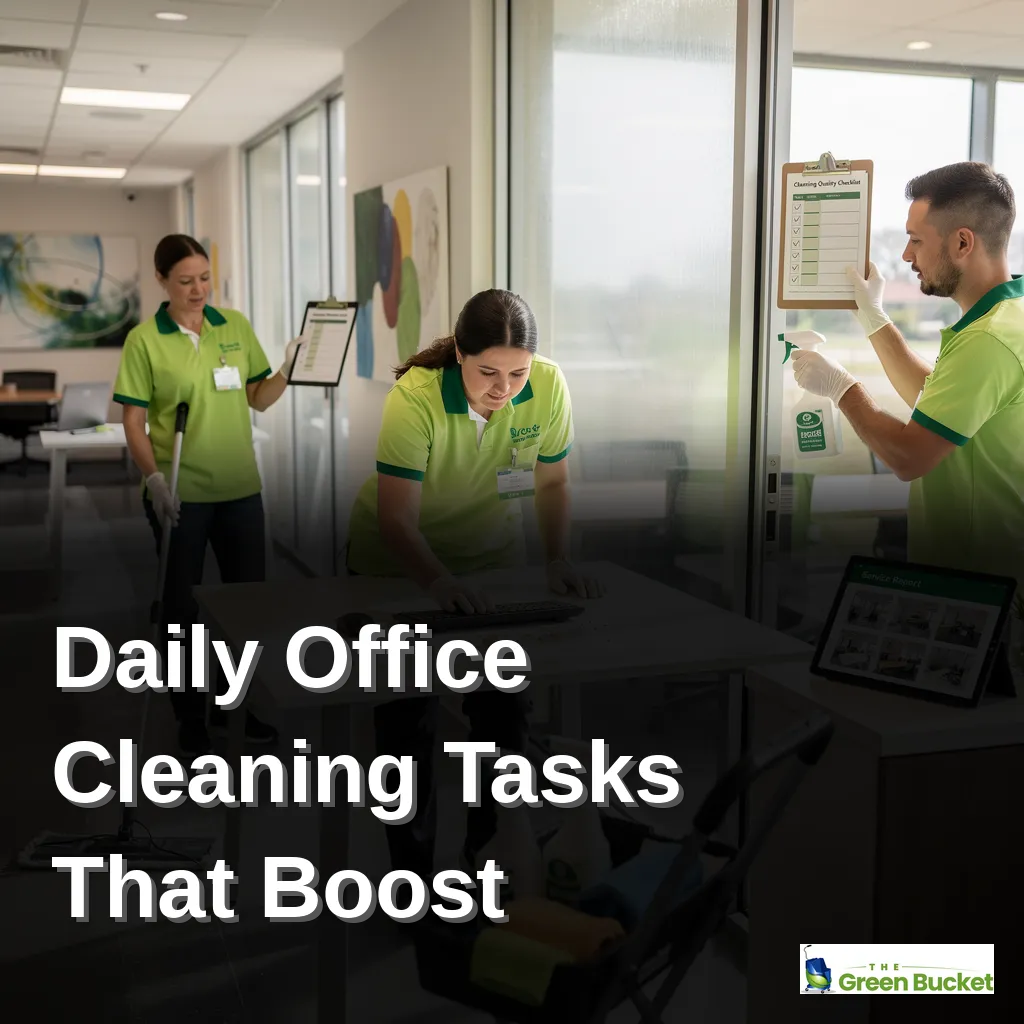
Daily office cleaning tasks that boost productivity include disinfecting high-touch surfaces, sanitizing restrooms, and emptying trash to reduce germs and absenteeism. The Green Bucket performs routine janitorial maintenance using non-toxic, biodegradable products and HEPA-filter vacuums, creating healthier workspaces that support employee focus, fewer sick days, and stronger client impressions.
Key Takeaways
- Daily desk and surface sanitization eliminates germs and reduces employee sick days significantly.
- High-touch areas like doorknobs and keyboards require cleaning multiple times throughout each workday.
- Organized, spotless offices boost employee productivity and create positive impressions on client visitors.
- The Green Bucket’s trained, uniformed staff maintain consistent cleaning standards across Orange, Seminole, and Osceola Counties.
Why Does Daily Office Cleaning Matter?
Daily cleaning sustains a productive, healthy workplace; skip it, and standards slip fast. Dust accumulates, germs spread across shared surfaces, and the workspace signals neglect within days, not weeks. We built our health-first approach around this reality, treating why daily office cleaning matters as a question of risk management, not aesthetics.
A spotless office does more than look presentable. It boosts employee productivity, lowers health risks, and leaves a favorable impression on clients and visitors who walk through the door. Offices that skip regular attention lose ground on all three fronts simultaneously.
What health risks does inconsistent cleaning create?
Irregular cleaning schedules raise the risk of illness spreading through a workplace, from the common cold to more serious respiratory infections. Health and safety depend on routine attention to shared spaces, not occasional deep cleans. Desks, doorknobs, and breakroom surfaces accumulate bacteria fastest in offices where cleaning happens sporadically rather than daily.
The consequences compound over time:
- Higher absenteeism as illness spreads through shared spaces
- Reduced focus and output among employees working in cluttered or unsanitary conditions
- Diminished first impressions for clients and visiting partners
- Accelerated wear on carpets, furniture, and equipment left uncleaned
Why choose a veteran-owned cleaning partner for daily service?
Consistency requires accountability. The Green Bucket has been providing commercial cleaning services for over 14 years. As a veteran-owned company, we apply disciplined, health-first standards to every visit rather than treating cleaning as an afterthought.
Facility managers and business owners who prioritize daily cleaning protect their teams and their reputation simultaneously. Neglecting this routine costs more than appearances suggest.

What Should You Clean Every Day in the Office?
High-touch surfaces, restrooms, and common areas top the list of daily office cleaning tasks that protect employee health and building appearance. Skipping these tasks does not save time. It shifts costs forward into equipment repairs, sick days, and rushed deep cleans later. A systematic daily routine prevents that outcome before it starts.
Our approach to what to clean daily in office environments centers on three zones: workstations, restrooms, and shared spaces. We treat each zone as part of a coordinated program, not a random checklist. Our daily service includes:
- Routine janitorial maintenance across desks, workstations, and break rooms
- High-touch surface disinfection on doorknobs, light switches, and shared equipment
- Restroom sanitation, including fixtures, floors, and touchpoints
- Common area cleaning and floor care to keep entryways and lobbies presentable
- Trash removal and liner replacement throughout the facility
This combination keeps buildings tenant-ready and reduces the bacterial load that builds up between deeper cleanings.
Why does daily cleaning matter more than weekly deep cleans?
Daily attention prevents the small buildup that deep cleaning alone cannot reverse. Dust, spills, and germs accumulate hour by hour, not week by week. Addressing them daily protects equipment and furnishings from premature wear, which lowers long-term replacement costs for the business.
What areas get missed most often in office cleaning?
Restrooms and common areas top the list of overlooked zones when cleaning responsibilities fall to untrained staff. Lobby floors, shared kitchen surfaces, and restroom touchpoints require consistent attention, not occasional wiping. Our trained team assigns specific coverage to each zone so nothing gets bypassed during a busy workday.
Facility managers who understand why daily office cleaning matters recognize that consistency, not intensity, drives results. A systematic daily approach costs less than reactive deep cleaning and keeps the workplace ready for clients, employees, and inspections alike.
What Belongs on a Daily Office Sanitation Checklist?
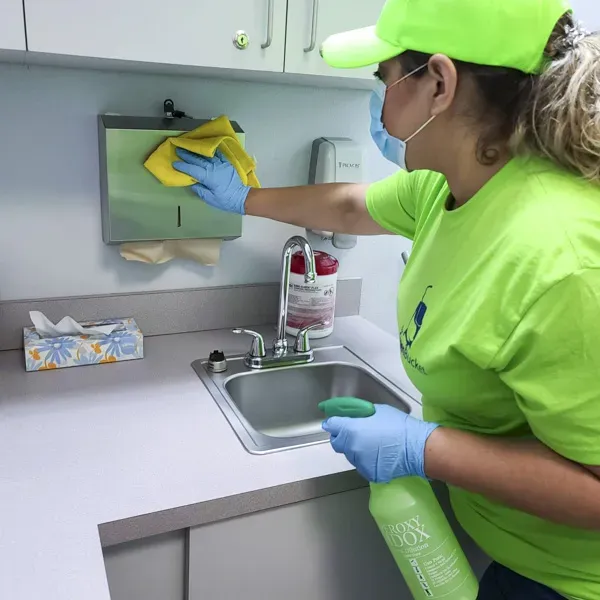
Desks, restrooms, high-touch surfaces, and floors anchor every effective daily sanitation routine. We build our office sanitation checklist daily around these four zones because neglecting any one of them creates a gap in workplace hygiene. A consistent routine protects organizations from OSHA violations while promoting productivity and safety across the entire facility.
At The Green Bucket, we treat daily office cleaning tasks as a science, not a guessing game. Our teams apply non-toxic, biodegradable products, HEPA-filter vacuums for improved indoor air quality, and microfiber cloths engineered for high-efficiency dust and germ removal. This combination reduces chemical exposure for employees while still meeting the sanitation standard that busy offices require.
What to Clean Daily in an Office?
Facility managers often ask exactly which surfaces demand daily attention versus a weekly pass. The answer centers on contact frequency: anything touched repeatedly throughout the workday belongs on the list.
- Desks, keyboards, and shared workstations
- Doorknobs, light switches, and elevator buttons
- Restroom fixtures, sinks, and dispensers
- Breakroom counters, microwaves, and refrigerator handles
- Floors in entryways and high-traffic corridors
Who Should Be Trusted to Handle Daily Cleaning?
Trust matters as much as technique when granting cleaning staff access to a facility after hours. Every team member at The Green Bucket completes rigorous background checks and training in secure cleaning protocols before stepping onto a client site.
We also run detailed check-in and check-out procedures for each visit. This accountability structure gives facility managers a documented record of coverage, timing, and reliability. Consistent oversight, paired with eco-conscious products, forms the foundation of a checklist that actually protects employee health rather than simply looking clean on the surface.
How Does a Clean Office Boost Employee Productivity?
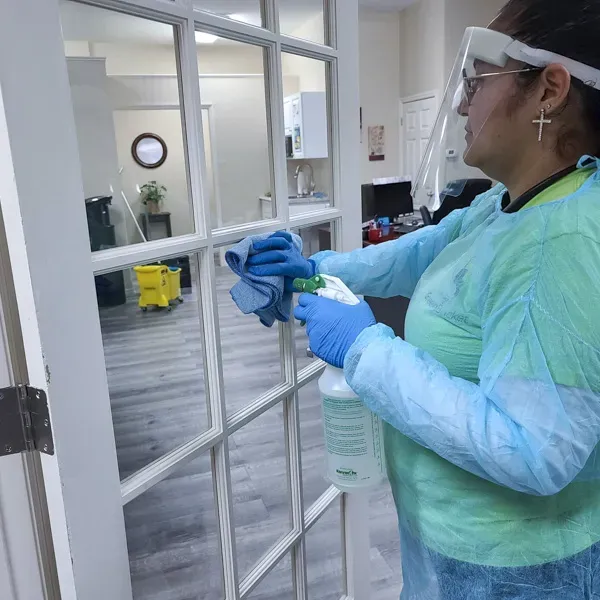
Clean workspaces reduce sick days and sharpen focus among staff. Germ-free surfaces and organized common areas translate directly into fewer disruptions and higher output. We build every service plan around this connection, because a spotless office is not cosmetic. It is a functional investment in workforce performance.
Absenteeism drops when daily office cleaning tasks target high-touch surfaces consistently. Eliminating germs and bacteria through a disciplined routine curbs the illness cycles that pull employees away from their desks. Fewer sick days mean fewer disruptions to deadlines, client calls, and team collaboration.
Appearance matters too. An untidy office reflects poorly on brand image and undermines employee health and morale at the same time. Cluttered desks, dusty vents, and neglected restrooms signal low standards to visitors — and to the staff who work there every day.
What should be included in an office sanitation checklist daily?
An effective office sanitation checklist daily covers desks, doorknobs, light switches, shared electronics, and restroom fixtures — the surfaces employees touch most often. Trash removal, floor care, and kitchen sanitation round out the routine. Consistency, not intensity, keeps germ counts low between deeper cleanings.
Why does hiring professional cleaners matter for productivity?
Hiring office cleaning services removes the guesswork that comes with ad hoc cleaning by internal staff. Our team members are trained, uniformed, and background-checked, supporting a safer, more predictable environment for every shift. We serve businesses across Orange, Seminole, and Osceola Counties, giving Central Florida offices local, responsive support they can plan around.
Daily attention protects the following:
- Reduced absenteeism from illness-causing germs
- Stronger brand impression for clients and visitors
- Safer, more consistent conditions for employees
- Fewer disruptions to workflow and deadlines
Understanding why daily office cleaning matters. what to clean daily in office environments gives facility managers a clear framework for protecting both health and output.
Which High-Touch Surfaces Get Overlooked Daily?
Door handles, light switches, and shared keyboards rank among the most frequently missed spots in standard cleaning routines. Elevator buttons, break room handles, and printer touchscreens fall into that same blind spot. The Green Bucket’s service scope names high-touch surface disinfection as its own daily office cleaning tasks category, not an afterthought folded into general dusting.
Without a structured system, these zones slip through the cracks fast. Standards erode over time when no checklist assigns ownership to specific surfaces. That is why our teams follow a written office sanitation checklist daily, ensuring every touchpoint gets logged and addressed rather than left to memory.
What Counts as a High-Touch Surface in an Office?
High-touch surfaces include anything multiple employees contact throughout the workday: doorknobs, conference room tables, copier buttons, shared phones, and restroom fixtures. These points transfer bacteria and viruses faster than floors or windows do. Any complete list of what to clean daily in office spaces has to treat these surfaces as priority items, not optional extras.
Why Does This Matter for Facility Managers?
Overlooked surfaces translate into avoidable illness and lost productivity across a workplace. Hiring office cleaning services that build high-touch disinfection into every visit removes much of that risk. We also maintain restroom sanitization and common area cleaning as core parts of our routine offerings. These spaces see some of the heaviest daily traffic in any building.
For facility managers weighing why daily office cleaning matters, the answer sits in these overlooked contact points. We offer 24/7 service flexibility, letting our teams disinfect high-touch zones outside business hours. That schedule keeps disruption low while keeping daily attention aligned with actual usage patterns, not guesswork.
How Do Daily, Weekly, and Deep Cleaning Differ?
Daily, weekly, and deep cleaning differ in scope, frequency, and the depth of work each one performs. Daily office cleaning tasks address surface-level hygiene—wiping desks, emptying trash, sanitizing restrooms—while weekly service tackles buildup that daily wiping misses, such as floor care and dusting behind furniture. Deep cleaning goes further still, reaching carpets, grout, and upholstery that routine service cannot touch. We structure our programs around
When Should You Hire Office Cleaning Services?
Growth signals, health complaints, and inconsistent upkeep all point to the right moment for hiring office cleaning services. Facility managers rarely wait for a crisis; they act once internal staff can no longer keep pace with daily demands.
Nearly half of facility teams still handle cleaning entirely in-house. The Ultimate Office Cleaning & Maintenance Checklist reports that 46.42 percent of facility managers surveyed do not consider outsourcing cleaning and janitorial services an option. That gap leaves room for reliable partners who understand why daily office cleaning matters to workplace health and employee output.
We built our practice around that gap. The Green Bucket has served Central Florida businesses for over 14 years, refining a daily cleaning approach that scales with each client’s facility. As a family-owned company, we have delivered eco-friendly commercial cleaning services for over 15 years, pairing sustainability with dependable results.
How do we know it’s time to outsource office cleaning?
Three signals usually indicate the shift is overdue: rising absenteeism, visible clutter building between shifts, and staff time pulled away from core duties toward cleaning tasks. Any single signal justifies a conversation with a commercial cleaning provider.
- Absenteeism climbs without a clear medical cause
- Common areas show wear faster than internal staff can address
- Employees spend paid hours cleaning instead of performing their assigned roles
- Facility size or operating hours outgrow internal cleaning capacity
We support that transition with 24/7 service flexibility, scheduling work around business hours rather than forcing disruption. That flexibility matters most for facilities that cannot pause operations for maintenance, including medical offices and financial institutions. Waiting until standards slip costs more than acting early.
How Does The Green Bucket Support Daily Results?
Orlando, FL serves as headquarters for The Green Bucket. A compact, veteran-owned team focuses on personalized service rather than high-volume, impersonal contracts. Established in 2015, our company built its structure around direct client relationships from the start. That foundation shapes how we handle every account, regardless of size.
Our team works around the clock to keep client facilities spotless, adjusting shifts to match business hours instead of forcing clients into a rigid schedule. For organizations hiring office cleaning services, this flexibility solves a common frustration: crews that disrupt daytime operations. We schedule around occupancy, not convenience.
Personalized commercial cleaning services stay central to how we operate. Clients receive attention calibrated to their space, their traffic patterns, and their risk factors, rather than a generic routine applied across unrelated industries.
Why does a smaller, veteran-owned team matter for daily cleaning?
A compact team means fewer layers between clients and the people doing the work. Communication moves faster, adjustments happen sooner, and accountability stays clear. Veteran-owned leadership brings discipline to scheduling and execution, supporting consistency across daily visits.
How does round-the-clock availability change service delivery?
Around-the-clock coverage lets us respond to spills, emergencies, or schedule changes without waiting for the next business day. Facilities avoid downtime because cleaning happens on their timeline. This responsiveness underscores why daily office cleaning matters for busy commercial spaces, where missed tasks compound quickly and undermine health and productivity goals.
FAQ
What daily tasks does office cleaning include?
Daily cleaning includes disinfecting high-touch surfaces like doorknobs and keyboards, sanitizing restrooms, and emptying trash. The Green Bucket also performs routine janitorial maintenance across desks, workstations, and break rooms using non-toxic, biodegradable products.
Why does daily cleaning matter for productivity?
Daily cleaning reduces germs and absenteeism while boosting employee focus and productivity. Spotless, organized offices also create stronger impressions on clients and visitors who enter the workplace.
What happens if office cleaning becomes inconsistent?
Inconsistent cleaning raises illness risk, increases absenteeism, and reduces employee focus in cluttered or unsanitary conditions. It also diminishes client impressions and accelerates wear on carpets, furniture, and equipment.
Conclusion
In closing, the connection between systematic daily office cleaning and sustained workplace productivity remains demonstrable and direct. Organizations that establish comprehensive cleaning protocols—addressing high-touch surfaces, air quality, and organized workspaces—create environments where employees operate with fewer distractions and reduced health interruptions. A structured approach to daily janitorial maintenance represents not an operational expense, but a strategic investment in workforce performance and organizational efficiency. Prioritizing these essential tasks positions your facility as a professional, health-conscious workplace where productivity thrives.