
Green Cleaning Orlando: Certifications That Matter
title: “Green Cleaning Orlando: Certifications That Matter” description: “Learn about green cleaning certifications from the Green Clean Institute and IJCSA that validate eco-friendly commercial cleaning practices in Central Florida.”
Green cleaning certifications from organizations like the Green Clean Institute and IJCSA validate a commercial cleaning provider’s commitment to safe, eco-friendly practices. For over 15 years, our family-owned business provides eco-friendly commercial cleaning services in Winter Park, ensuring compliance with rigorous training and sustainable procedures.
Key Takeaways
- Green cleaning certifications validate a commercial cleaning provider’s commitment to safe, eco-friendly practices.
- Certification programs evaluate products, equipment, and procedures against established sustainability benchmarks.
- Third-party verification ensures that environmental claims are independently validated.
- Certified programs guide facilities toward practices that minimize ecological harm while creating healthier spaces for occupants.
What is green cleaning certification?
A green cleaning certification is a formal credential that verifies a cleaning operation meets rigorous standards for environmental impact and human health. Without this verification, facility directors risk selecting providers whose environmental claims lack independent validation.
The certification process examines every aspect of a cleaning program. Products must demonstrate low toxicity and biodegradability. Equipment specifications matter equally. Methods receive the same scrutiny as materials. ISSA’s January 2025 guidance on the subject confirms that what is green cleaning certification involves recognizing environmentally responsible practices where products and methods meet high standards for both environmental impact and health outcomes.
How does certification differ from basic green claims?
The distinction carries operational weight. The Green Clean Institute identifies a widespread problem: most cleaning services operate as “Token Green,” doing only enough to justify their green cleaning boasting. A legitimate eco-friendly janitorial certifications program requires documented training, verified product selection, and ongoing compliance monitoring. Token efforts provide none of these safeguards.
This dual focus on environmental and human health separates certified operations from those making unverified marketing claims. Property managers who accept token green services lose the measurable indoor air quality improvements and reduced chemical exposure that certified programs deliver.
What operational practices do certified programs require?
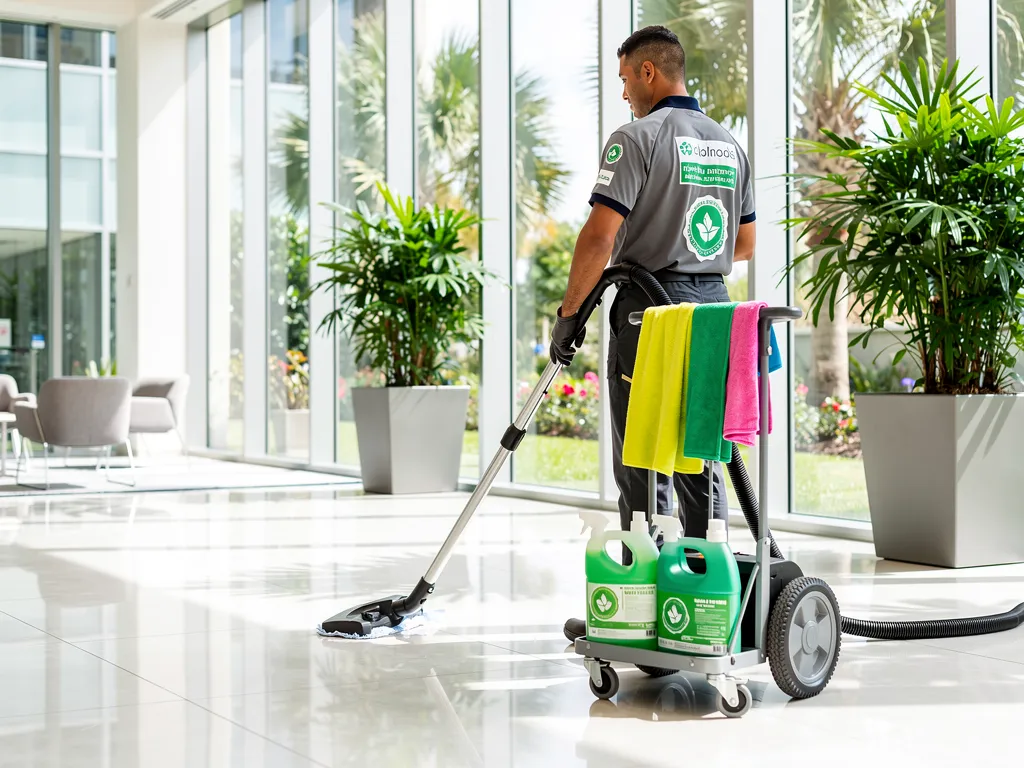
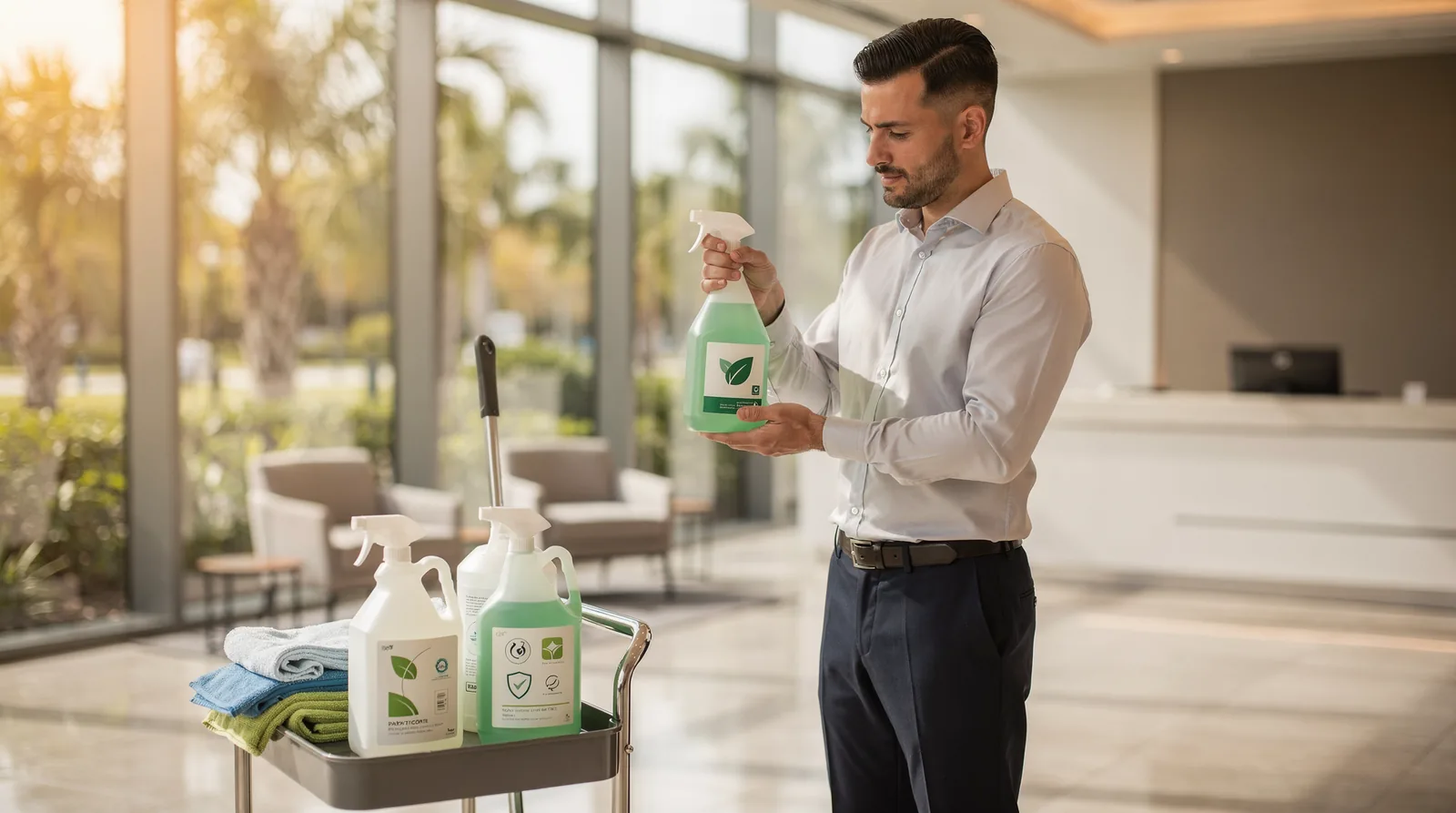
Certified green cleaning for businesses demands specific, verifiable practices. At The Green Bucket, our sustainability commitment includes non-toxic, biodegradable cleaning products, HEPA-filtration vacuums for improved air quality, and microfiber cloths for high-efficiency cleaning. These elements represent the operational baseline that certification auditors examine.
The benefits of eco-friendly cleaning extend beyond marketing positioning. HEPA filtration captures particulates that conventional vacuums recirculate. Microfiber technology removes contaminants without chemical assistance. Biodegradable formulations break down without persisting in wastewater. Each practice contributes measurable improvements to indoor environmental quality, a metric that matters for occupant health and facility compliance. Our approach to understanding certifications confirms that documented standards produce outcomes that unverified programs cannot match.
Why do green cleaning certifications matter for businesses?
Green cleaning certifications validate that a janitorial provider follows documented, health-first protocols rather than making unverifiable environmental claims. Independent validation of environmental claims protects facility directors from unverified marketing.
The stakes extend beyond surface cleanliness. Green cleaning for businesses directly affects indoor air quality, occupant health, and regulatory compliance. A certification program ensures member companies remain current on safe green practices, training, and regulations. This ongoing education requirement closes a critical gap: most cleaning services adopt what the Green Clean Institute terms “Token Green” positioning, doing only enough to justify superficial eco-friendly marketing without substantive operational changes.
What does a green cleaning certification actually verify?
A legitimate green cleaning certification confirms three operational realities. First, the provider uses products and methods meeting established environmental and health standards. Second, staff complete structured training on proper chemical handling, dilution rates, and application techniques. Third, the certification requires renewal, preventing stagnation.
Yearly green certification is required so members stay thoroughly trained in all current aspects of natural, safe, eco-friendly green cleaning procedures. This recurring obligation matters because product formulations and health research evolve. A certification earned five years ago reflects outdated knowledge.
How do certifications protect facility compliance?
Certifications create a documented chain of accountability. When a provider holds recognized credentials, facility managers gain verifiable proof of due diligence for internal audits, insurance requirements, and occupant communications. The documentation trail supports environmental, health, and safety reporting without requiring the facility team to independently verify every cleaning product and procedure.
Eco-friendly janitorial certifications also standardize expectations across multiple locations. A property management firm overseeing buildings across multiple communities receives consistent protocol adherence rather than location-dependent variability. This standardization reduces the administrative burden of managing disparate vendor relationships while maintaining uniform indoor environmental quality benchmarks.
What are the top eco-friendly janitorial certifications?
The top eco-friendly janitorial certifications include ISSA’s CIMS Certification, the Green Clean Institute Professional Certification, and the IJCSA Green Cleaning Certification. Each program validates a cleaning operation’s commitment to environmentally responsible practices through structured training and documented standards.
ISSA’s CIMS Certification offers a comprehensive framework that aligns with green cleaning values for facilities. The program helps organizations standardize cleaning operations while enhancing sustainability across their buildings. Facility directors pursuing green cleaning for businesses find this framework particularly useful for establishing measurable environmental benchmarks.
The Green Clean Institute provides staff training that is 100% online and available in both English and Spanish. This accessibility supports consistent workforce education without disrupting daily operations. The institute positions itself as the original green cleaning certification, emphasizing credibility over what it describes as “token green” claims from services that do only enough to justify their marketing.
How does the IJCSA Green Cleaning Certification compare on cost?
The IJCSA Green Cleaning Certification is the most affordable program online today. The certification ensures member companies remain current on safe green practices, training, and regulations. Members complete 5 to 6 hours of training to gain certification, with yearly renewal required to maintain current knowledge of natural, safe, eco-friendly procedures.
What documentation do certified cleaning companies provide?
Certified members can submit a green cleaning certificate with their cleaning proposals. This documentation verifies that the business meets the standards of a current green cleaning certification program. The certificate serves as evidence that the cleaning operation remains certified and compliant with established environmental requirements.
Understanding what is green cleaning certification requires recognizing that these programs differ in scope, cost, and delivery method. The benefits of eco-friendly cleaning extend beyond environmental impact to include documented compliance and workforce competency.
How does green cleaning support LEED and WELL standards?
Green cleaning protocols directly impact USGBC LEED points for building certification. Sustainable janitorial standard operating procedures align facilities with WELL and Fitwel building standards. These frameworks reward documented, health-first cleaning practices with measurable certification outcomes.
What LEED credits does green cleaning influence?
LEED v4.1 Operations and Maintenance awards points for sustainable purchasing, indoor chemical management, and ongoing custodial effectiveness. Facilities earn credits by using third-party certified products and implementing documented cleaning protocols. The standard evaluates both product composition and procedural consistency across the building lifecycle.
How do WELL standards address cleaning operations?
The WELL Building Standard measures cleaning’s impact on indoor air quality, material safety, and occupant health. Its cleaning and sanitization concept requires reduced hazardous chemical exposure, trained personnel, and verifiable performance tracking. These requirements move beyond product selection into operational discipline and outcome documentation.
Our approach uses non-toxic, eco-friendly products and hospital-grade solutions where required for sensitive environments. This dual capability supports both the broad material safety requirements of LEED and the targeted disinfection protocols WELL demands in healthcare-adjacent spaces. Monthly quality reports help decision-makers track outcomes against agreed scopes, creating the documentation trail both standards require.
Green cleaning for businesses pursuing certification involves more than product swaps. It demands integrated standard operating procedures, staff competency verification, and continuous performance measurement. The documentation burden alone causes many facilities to lose available credits. Our reporting structure captures the data points auditors need without adding administrative overhead to facility teams.
Understanding the certification landscape matters before committing to a program. Our overview of green cleaning certifications explains how Green Seal, EPA Safer Choice, and LEED requirements intersect. Facilities that align janitorial operations with these frameworks capture credits that remain unclaimed in buildings using conventional cleaning methods.
What practices define genuine green cleaning for businesses?
Genuine green cleaning for businesses relies on non-toxic, low-VOC, biodegradable chemistries that protect indoor air quality. These formulations eliminate harsh chemical residues that compromise occupant health and facility safety. A cleaning program requires verified green products to claim authentic environmental responsibility.
Green cleaning for businesses extends far beyond product selection. The methodology encompasses equipment choices, procedural protocols, and staff competency. HEPA-filtration vacuums capture fine particulate matter that conventional vacuums exhaust back into the breathing zone, preventing recirculation of dust, allergens, and pathogens. Microfiber cross-contamination color coding assigns specific cloth colors to designated areas, reducing the transfer of bacteria between surfaces. These practices form the operational backbone of any credible eco-friendly janitorial certifications program.
How do equipment choices affect green cleaning outcomes?
Equipment determines whether a cleaning process removes contaminants or merely redistributes them. HEPA-filter vacuums trap fine particulate matter that conventional vacuums exhaust back into the breathing zone. Microfiber cloths achieve high-efficiency cleaning without chemical overuse. The combination reduces both airborne and surface-level pollutants.
What role does staff training play in certified green cleaning?
Staff competency separates superficial green claims from measurable results. Our team members complete rigorous training on proper product dilution, color-coded microfiber protocols, and HEPA equipment operation. Every technician arrives uniformed and background-checked, ensuring security and trust at every serviced facility. This operational discipline supports the benefits of eco-friendly cleaning that facility directors measure through improved air quality metrics and reduced occupant complaints.
The International Janitorial Cleaning Services Association requires 5 to 6 hours of training for green cleaning certification. ISSA notes that certified programs guide facilities toward practices minimizing ecological harm while creating healthier spaces. These standards define what green cleaning Orlando providers must meet to deliver verifiable results. Our approach integrates these requirements into every service plan, documented through photo verification and monthly quality reports.
How can facility managers verify a vendor’s green credentials?
Verification begins with documented third-party certification. A legitimate green cleaning orlando provider holds credentials from recognized bodies like the Green Clean Institute or ISSA, not self-authored claims. Facilities without this verification risk exposing occupants to cleaning agents that undermine indoor air quality.
What red flags signal greenwashing in commercial cleaning?
Vague marketing language without specific certification names is the primary warning sign. Most cleaning services practice what the Green Clean Institute terms “Token Green,” doing only enough to justify their eco-friendly boasting. Authenticated third-party standards require measurable compliance, not aspirational statements. A vendor unable to produce current certification documentation during the vetting process signals a gap between marketing and operational reality.
What documentation should a certified green vendor provide?
Three categories of evidence separate certified providers from unverified competitors. First, staff training records confirm that technicians completed formal eco-friendly janitorial certifications through accredited programs. Second, background check documentation verifies that personnel entering your facility meet security standards. Third, quality assurance reporting demonstrates consistent protocol adherence. Our team follows detailed checklists and documents work with photo verification, creating an audit trail that facility managers review monthly. This transparency transforms green cleaning for businesses from a promise into a verifiable outcome.
The benefits of eco-friendly cleaning materialize only when certification is genuine. We provide 24/7 service flexibility and emergency support to minimize operational disruption while maintaining documented standards. Facility managers who skip credential verification inherit liability for indoor environmental quality without the controls that certified programs deliver.
What are the benefits of eco-friendly cleaning for indoor health?
Eco-friendly cleaning practices directly improve indoor health by reducing airborne chemical loads and surface contaminants. Certified green cleaning programs minimize ecological harm while creating measurably healthier spaces for building occupants. Facilities that forgo these standards risk elevated respiratory complaints, increased absenteeism, and long-term liability tied to poor indoor environmental quality.
Green cleaning for businesses shifts the focus from appearance to occupant wellbeing. Traditional products often leave volatile organic compounds lingering in enclosed spaces. Eco-friendly alternatives eliminate that chemical residue. The result is cleaner air and fewer irritants circulating through HVAC systems. For facility directors managing high-occupancy commercial properties, this distinction carries operational weight. Healthier indoor environments support safe, productive workplaces where staff report fewer symptoms and maintain consistent attendance.
How does green cleaning certification affect indoor air quality?
A green cleaning certification validates that products and methods meet rigorous health and environmental standards. ISSA notes that these certifications guide facilities in adopting practices that minimize ecological harm while creating healthier spaces for occupants. Certified programs restrict chemicals linked to respiratory irritation and dermatological reactions. The certification process also mandates proper dilution ratios and application techniques. Improper chemical use, even with safer products, undermines air quality gains.
What health outcomes do businesses see with eco-friendly janitorial programs?
Organizations adopting eco-friendly janitorial certifications report fewer occupant health complaints and reduced custodial staff injuries. Our green cleaning Orlando operations serve businesses across Orange, Seminole, and Osceola Counties. We observe consistent patterns across these facilities. Medical offices see lower cross-contamination risk. Corporate offices document fewer sick days during peak cold and flu seasons. Schools report improved attendance among students and faculty. These outcomes stem from a health-first approach that prioritizes occupant safety over cosmetic appearance. As a veteran-owned company, we measure success through documented health improvements rather than surface shine alone.
How to select a green cleaning partner in Central Florida?
Selecting a green cleaning partner requires verifying operational practices, not marketing claims. A qualified provider demonstrates documented protocols, trained personnel, and verifiable compliance with eco-friendly janitorial certifications. These safeguards protect occupants from conventional chemicals that compromise indoor air quality and health.
What credentials prove a cleaning company follows genuine green practices?
Legitimate green cleaning for businesses rests on third-party validation. The Green Clean Institute certifies cleaning services and green buildings through 100% online staff training available in English and Spanish. The IJCSA Green Cleaning Certification requires 5 to 6 hours of training covering safe green practices, current regulations, and eco-friendly procedures. ISSA notes that what is green cleaning certification involves recognizing environmentally responsible cleaning practices where products and methods meet high standards for environmental impact and health. These certifications separate services with documented training from those offering only superficial green claims.
How should a facility evaluate a provider’s operational transparency?
Operational transparency reveals whether a cleaning partner delivers on its promises. Our company provides customized plans built after on-site assessments to align scope and frequency to facility needs. Transparent pricing follows, based on facility size, frequency, and scope of work. We are fully licensed, insured, and bonded, combining eco-friendly products with trained personnel. This structure eliminates guesswork and ensures every dollar spent maps to a defined outcome.
What geographic coverage matters for Central Florida facilities?
Proximity determines response time and consistent site-level quality. Our coverage spans communities across Orange, Seminole, and Osceola counties. Local presence enables rapid emergency support and regular supervision that distant providers cannot match. The benefits of eco-friendly cleaning multiply when a partner combines certified green methods with dependable, nearby service delivery.
FAQ
What green cleaning certifications validate a commercial cleaning provider’s commitment?
Green cleaning certifications from organizations like the Green Clean Institute and IJCSA validate a commercial cleaning provider’s commitment to safe, eco-friendly practices.
How does the Green Clean Institute differentiate legitimate certification from token efforts?
The Green Clean Institute identifies that most cleaning services operate as “Token Green,” doing only enough to justify boasting, while legitimate certification requires documented training, verified product selection, and ongoing compliance monitoring.
What operational practices do certified programs require?
Certified green cleaning for businesses demands non-toxic, biodegradable cleaning products, HEPA-filtration vacuums, and microfiber cloths, which auditors examine as the operational baseline.
Conclusion
Selecting a green cleaning partner demands verification of third-party certifications, documented training, and operational transparency. Facility managers who prioritize these criteria secure measurable improvements in indoor air quality and occupant health. The decision to validate credentials transforms a routine service contract into a strategic investment in workplace wellbeing and long-term liability protection.