
Medical Facility Compliance Florida: Sanitization Standards
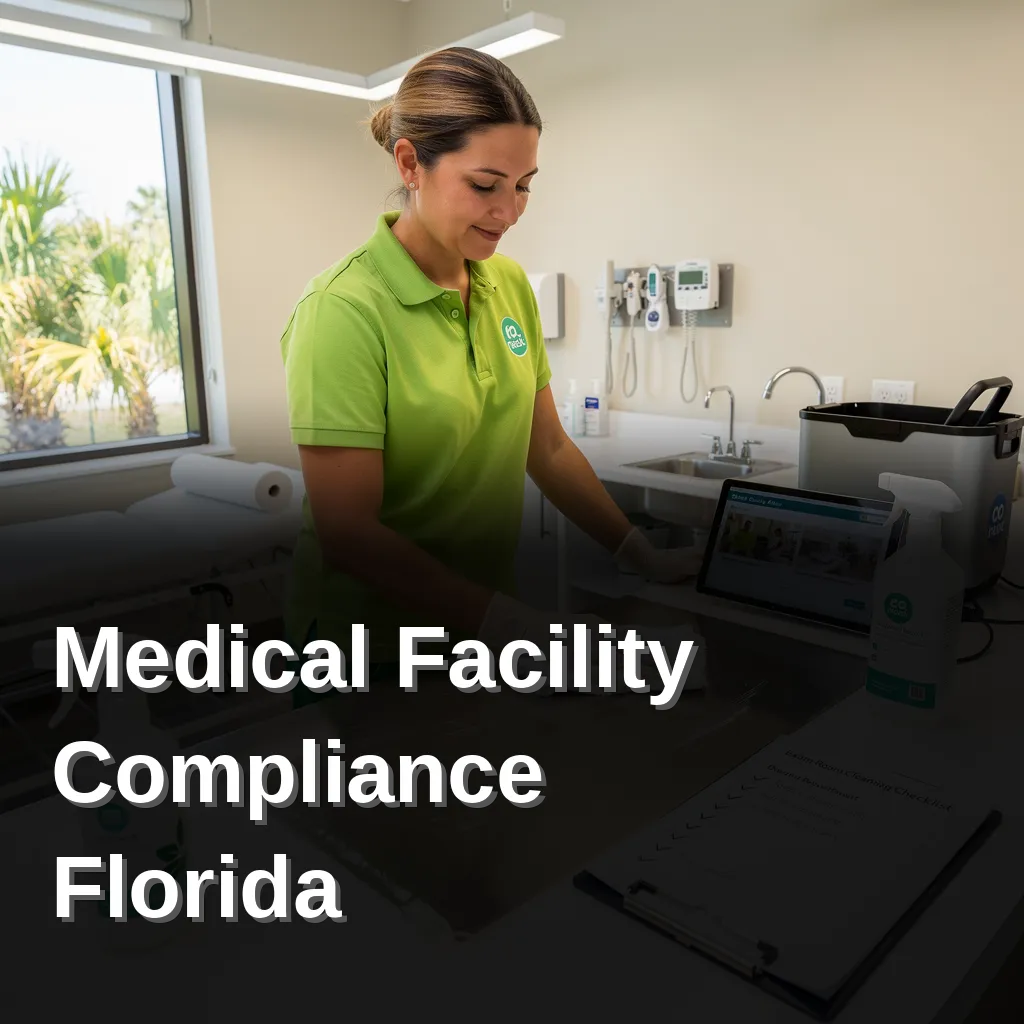
Compliance protocols across Florida’s 700+ licensed hospitals and outpatient facilities demand strict adherence to disinfection, dilution, and cross-contamination controls. The Green Bucket, veteran-owned and serving Orange, Seminole, and Osceola Counties since 2015, deploys trained, uniformed, background-checked staff to meet these state and federal sanitization standards reliably.
Florida medical facility compliance requires strict separation of cleaning, disinfection, and sterilization protocols across more than 700 licensed hospitals plus thousands of outpatient clinics and surgical centers statewide. We deliver hospital-grade disinfection, documented photo verification, and monthly quality reports for Central Florida healthcare clients, ensuring facility managers meet state and federal regulatory standards consistently.
Key Takeaways
- Florida operates over 700 licensed hospitals requiring specialized medical facility sanitization compliance standards.
- The Green Bucket’s trained, uniformed, background-checked staff meet rigorous healthcare environmental service regulations across Central Florida.
- Medical facilities must implement day porter services and compliance systems protecting patient safety and facility standards.
- Healthcare cleaning represents Florida’s most regulated sector, demanding expertise The Green Bucket delivers through 14+ years experience.
What Will This Compliance Guide Help You Achieve?
Medical facility compliance Florida demands attention to two forces at once: strict state regulation and a subtropical climate that accelerates microbial growth. This healthcare sanitization guide addresses both, giving practice administrators and compliance officers a clear path through Florida’s specific regulatory environment and its year-round humidity challenges. Facility managers across the state need protocols built for these conditions, not generic cleaning checklists borrowed from other regions.
We designed this resource to translate complex requirements into usable, day-to-day practice. Florida facility managers and cleaning service providers gain access to practical, healthcare-specific protocols they can apply immediately. Working through this guide equips readers to:
- Identify which hipaa cleaning protocols Florida facilities must follow for privacy-sensitive areas
- Apply medical cleaning regulations consistently across exam rooms, waiting areas, and clinical zones
- Understand how to clean medical offices Florida patients trust, from surface selection to disinfection contact time
- Recognize climate-driven risks unique to Florida’s humidity and heat
Who Should Use This Guide?
Surgical center directors, medical practice administrators, and compliance officers across Central Florida benefit most directly. Facility managers overseeing multiple sites also find value here, since consistency across locations reduces audit exposure and infection risk.
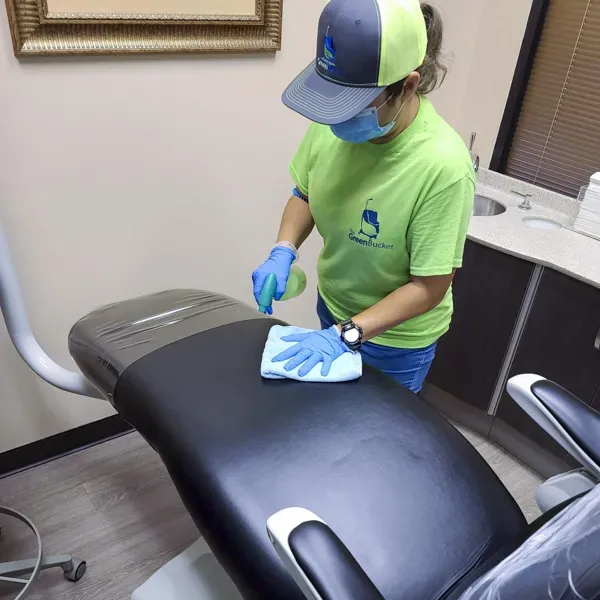
As a veteran-owned company, The Green Bucket brings disciplined, standards-driven thinking to every compliance-ready cleaning program we build. Our staff arrive trained, uniformed, and background-checked before entering any sensitive medical environment. That screening process matters in facilities where patient privacy and infection control intersect daily.
We built this guide to function as a working reference, not a one-time read. Administrators can return to specific sections as regulations shift or as new staff join their cleaning programs. Compliance is ongoing work, and this guide reflects that reality.
What Florida Regulations Govern Medical Facility Cleaning?
Florida enforces medical facility compliance florida standards through a layered system spanning state health codes, county-level permitting, and federal privacy law. Healthcare environmental services rank among the most tightly regulated cleaning sectors in the state, a reflection of the scale involved: Florida operates more than 700 licensed hospitals alongside thousands of outpatient clinics, long-term care facilities, and surgical centers. Each facility type carries distinct cleaning obligations, and oversight does not stop at the state line.
Our approach to medical cleaning regulations starts with mapping the full compliance landscape before a single surface gets wiped. That landscape covers four core areas: the regulatory framework itself, operational mechanics on the ground, classification boundaries between cleaning, disinfection, and sterilization, and the common misconceptions that trip up facility managers. Getting these categories straight matters, because treating disinfection tasks as routine cleaning creates real liability exposure.
County health departments add another layer of oversight. Sanitation certification for Florida Department of Health-regulated facilities gets issued locally, in the county where the facility operates, rather than from one centralized state office. That structure means compliance expectations vary by jurisdiction, so we verify county-specific requirements before finalizing any service plan.
Why does Florida’s climate affect medical cleaning rules?
Florida’s humid, temperate climate creates conditions that favor microbial growth beyond what facilities in drier states encounter. This reality pushes the healthcare sector toward stricter sanitization measures than standard commercial cleaning requires. Any complete healthcare sanitization guide built for Florida facilities must account for that moisture factor rather than treat it as an afterthought.
Compliance officers evaluating a cleaning partner should confirm familiarity with hipaa cleaning protocols florida facilities require, along with documented how to clean medical offices florida procedures for each room classification. We build service plans around these distinctions, aligning protocols to county rules, facility type, and Florida’s climate-driven risk factors before work begins on site.
How Do Cleaning Disinfection And Sterilization Differ Legally?
Cleaning, disinfection, and sterilization sit on separate legal footing under Florida healthcare regulation. Each term carries distinct liability exposure, and confusing one for another creates measurable risk for facility administrators. Regulators, insurers, and accreditation bodies treat these three processes as legally separate activities, not interchangeable housekeeping tasks.
Cleaning removes visible soil and organic matter from a surface without killing pathogens. Disinfection destroys most microorganisms on a surface using an EPA-registered agent at a specified contact time. Sterilization eliminates all microbial life, including spores, and applies almost exclusively to surgical
What HIPAA Requirements Shape Your Cleaning Protocols?
HIPAA compliance shapes every stage of medical facility compliance in Florida, from surface disinfection schedules to staff access controls. Protected health information demands documentation trails. Infection control protocols that satisfy the highest industry standards for regulatory and privacy expectations. Cleaning crews entering exam rooms, labs, or records areas touch spaces where a single lapse creates liability exposure for the entire practice.
We built our approach around a practical healthcare sanitization guide that treats privacy as inseparable from disinfection. Our teams follow HIPAA cleaning protocols for Florida practices that administrators can verify, pairing surface-level disinfection with strict limits on who enters sensitive areas and when. Documentation of each visit supports the audit trail compliance officers rely on during accreditation review.
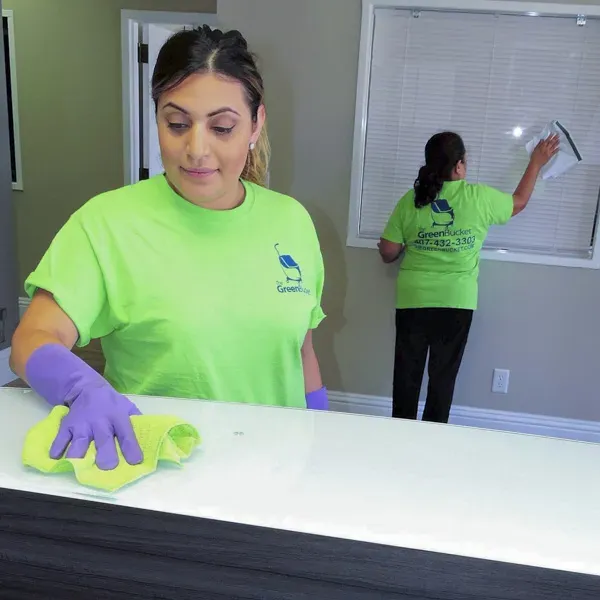
Applying medical cleaning regulations consistently requires more than a checklist; it requires staffing decisions built for healthcare environments. The Green Bucket’s staff are trained, uniformed, and background-checked, reducing the risk of unauthorized access in areas containing protected health information. Verified identities give front-desk and clinical staff a clear way to confirm who belongs on-site.
Facility managers researching how to clean medical offices in Florida should confirm four safeguards before signing a service agreement:
- Confirm background checks and identity verification for every technician assigned to the account.
- Require documented entry and exit times for rooms holding patient records.
- Schedule cleaning outside active patient hours wherever the floor plan allows it.
- Review disinfection logs monthly against the facility’s own compliance calendar.
Does Cleaning Schedule Timing Affect HIPAA Compliance?
Timing matters directly. The Green Bucket offers 24/7 service flexibility, allowing cleaning crews to work without exposing protected areas during active patient hours. Scheduling around appointment blocks limits the window in which unauthorized viewing of records or charts becomes possible, keeping compliance officers confident between audits.
What Are The Steps To Clean Medical Offices?
Cleaning a medical office in Florida follows a fixed sequence rather than a random checklist. Hospital administrators, clinic managers, and healthcare facility directors across Central Florida rely on that sequence because a single skipped task creates exposure for patients and staff. Medical facility compliance florida standards demand structure, and we built our process around that structure. Our healthcare sanitization guide pairs a baseline reset with ongoing maintenance so every office stays survey-ready.
Before daily service begins, a facility needs a clean starting point. We establish that baseline first, then layer routine care on top of it.
- Reset the space with a deep clean. Before an office opens or relocates, we perform move-in/move-out deep cleaning to remove construction dust, prior tenant residue, and buildup that standard service cannot reach.
- Set a schedule around procedure volume. We build personalized commercial cleaning schedules timed to procedure calendars and patient traffic, minimizing disruption to appointments.
- Handle daily janitorial tasks. Our trained, insured team covers routine janitorial work — trash removal, surface wiping, and supply restocking — across exam rooms and offices.
- Maintain common areas and lobbies. Waiting rooms and reception areas receive regular attention to protect the first impression patients form of the facility.
- Sanitize restrooms on a fixed rotation. Restroom sanitization follows a documented rotation, since these spaces carry high contamination risk in any medical setting.
- Complete floor care. Consistent floor care removes contaminants tracked in from parking areas and hallways, supporting infection control across the building.
How Often Should A Medical Office Be Cleaned?
Frequency depends on patient volume, procedure type, and square footage, not a fixed calendar interval. We schedule service around each facility’s actual operating rhythm rather than a generic template. High-traffic clinics typically need daily attention, while smaller practices may need a lighter recurring cadence layered with periodic deep cleans.
Following medical cleaning regulations and respecting hipaa cleaning protocols florida guidance around patient records and confidentiality area access remain constant through every step, regardless of frequency. Facilities researching how to clean medical offices florida should treat baseline reset and recurring maintenance as one continuous program, not separate projects.
How Should You Document And Verify Compliance?
Documentation forms the backbone of medical facility compliance florida programs, giving accreditation surveyors verifiable proof that infection control protocols meet regulatory thresholds. Verification depends on structured records that trace every cleaning task back to a documented standard, not memory or assumption.
Regulatory compliance and documentation trails must meet the highest industry benchmarks to withstand accreditation review. A facility that cannot produce dated, task-specific records during a survey faces findings regardless of how thoroughly the space was actually cleaned. We build our processes around this reality, treating documentation as inseparable from the cleaning work itself.
To establish a defensible compliance record, we recommend the following sequence:
- Define the scope of work in writing, including frequency and product specifications for each area.
- Log every cleaning and disinfection task by date, time, and staff member.
- Photograph high-risk zones before and after service to create a visual audit trail.
- Store records in a centralized system accessible for surveyor review at any time.
- Review logs monthly against the written scope to catch gaps before an inspection does.
What Makes A Compliance Record Defensible?
A defensible record links each task to a specific protocol, date, and responsible staff member. Photo verification adds an objective layer that written logs alone cannot provide. Gaps in the trail, even unintentional ones, raise questions during accreditation review.
Our organization has delivered commercial cleaning services for more than 14 years, building an operational history that supports this healthcare sanitization guide approach with consistent execution. We serve practices across Orange, Seminole, and Osceola Counties, giving Central Florida facility managers dependable, local support for hipaa cleaning protocols florida and broader medical cleaning regulations. That proximity matters when a surveyor calls with 48 hours’ notice.
What Common Mistakes Cause Compliance Failures?
Three recurring errors account for most compliance failures across Florida medical practices: treating disinfection casually, mistaking general janitorial work for healthcare-grade sanitation, and ignoring the state’s climate. Each mistake carries measurable consequences for patient safety and facility liability.
A single oversight sets off a chain reaction. An improperly disinfected high-touch surface, an incorrect chemical dilution, or a cross-contaminated mop bucket can lead to healthcare-associated infections, failed accreditation surveys, and significant liability exposure. We build medical facility compliance florida protocols around eliminating these single points of failure before they compound.
Many facility managers assume standard commercial cleaning satisfies healthcare standards. This assumption overlooks a critical fact: Florida operates more than 700 licensed hospitals alongside thousands of outpatient clinics, long-term care facilities, and surgical centers, placing healthcare environmental services among the most regulated cleaning sectors in the state. Applying office-grade protocols to a surgical suite or exam room invites medical cleaning regulations violations that a generic cleaning contract never anticipates.
Climate compounds the risk. Florida’s humid, temperate conditions create an environment favorable to pathogen development and spread between cleaning cycles. Facilities that ignore humidity control in their healthcare sanitization guide planning leave gaps where bacteria and mold thrive undetected.
Why does staff training matter for compliance?
Untrained cleaning staff cannot execute correct dilution ratios, contact times, or surface-specific protocols consistently. Following documented hipaa cleaning protocols florida procedures requires trained personnel who understand which chemicals treat which surfaces and why.
Common mistakes we correct when guiding facilities on how to clean medical offices florida properly include:
- Reusing mop water or cloths across patient rooms
- Skipping manufacturer-specified contact time for disinfectants
- Overlooking humidity-prone areas during routine cycles
- Applying identical protocols to clinical and non-clinical zones
Addressing these errors protects accreditation status and patient outcomes alike.
How Do You Choose A Compliant Cleaning Partner?
Selecting a compliant partner starts with verifying track record, protocols, and staff accountability before signing any agreement. Florida practice administrators carry legal and patient-safety responsibility for every vendor decision. The screening process deserves the same rigor as a clinical hire.
Since 2015, The Green Bucket has grown into a dependable medical facility compliance florida partner, built specifically for the demands of regulated healthcare environments. Longevity alone does not guarantee competence, though. A true healthcare sanitization guide for vetting vendors should weigh documentation trails, staff training, and scheduling flexibility together, not in isolation.
A dedicated professional provider strengthens infection control protocols, regulatory compliance, and documentation trails that meet the highest industry standards expected of Florida healthcare facilities. These records matter during accreditation surveys and internal audits alike. Facilities should request evidence of a written hipaa cleaning protocols florida framework rather than a verbal assurance.
Compare readiness against these benchmarks before engaging any vendor:
- Availability for round-the-clock scheduling that limits disruption to patient flow
- Staff who are trained, uniformed, and background-checked for accountability in sensitive areas
- Documented adherence to current medical cleaning regulations
- Flexible response for emergency or after-hours cleanup requests
What Staffing Details Matter Most for Medical Offices?
Trained, uniformed, background-checked personnel support the accountability that compliance-driven environments require. Facility directors should confirm identity verification and access controls before granting cleaning staff entry to clinical zones.
Does 24/7 Availability Affect Compliance?
Round-the-clock scheduling flexibility reduces exposure by allowing cleaning outside active patient hours. The Green Bucket offers this availability across Central Florida, giving administrators researching how to clean medical offices florida a practical path to consistent, disruption-free service.
FAQ
What makes Florida medical facility compliance different from standard cleaning?
Florida medical facility compliance combines strict state regulation with a subtropical climate that accelerates microbial growth, requiring hospital-grade disinfection protocols beyond generic cleaning checklists borrowed from other regions.
Which areas does The Green Bucket serve for healthcare cleaning compliance?
The Green Bucket, veteran-owned and established in 2015, serves medical facilities in Orange, Seminole, and Osceola Counties across Central Florida with regulatory-compliant sanitization services.
What qualifications does The Green Bucket staff have for entering medical facilities?
The Green Bucket deploys trained, uniformed, background-checked staff into sensitive medical environments, addressing the intersection of patient privacy and infection control that healthcare settings demand.
Conclusion
In closing, maintaining compliance with Florida’s medical facility sanitization standards requires a systematic approach grounded in regulatory knowledge, appropriate product selection, and consistent execution. Organizations that prioritize health-first cleaning protocols—supported by detailed documentation, trained personnel, and transparent quality oversight—establish the foundation for safe, productive healthcare environments. The commitment to evidence-based sanitation practices protects patient safety, supports staff confidence, and demonstrates organizational accountability to regulatory bodies and stakeholders alike.