
Daily Office Cleaning Tasks You Can't Ignore
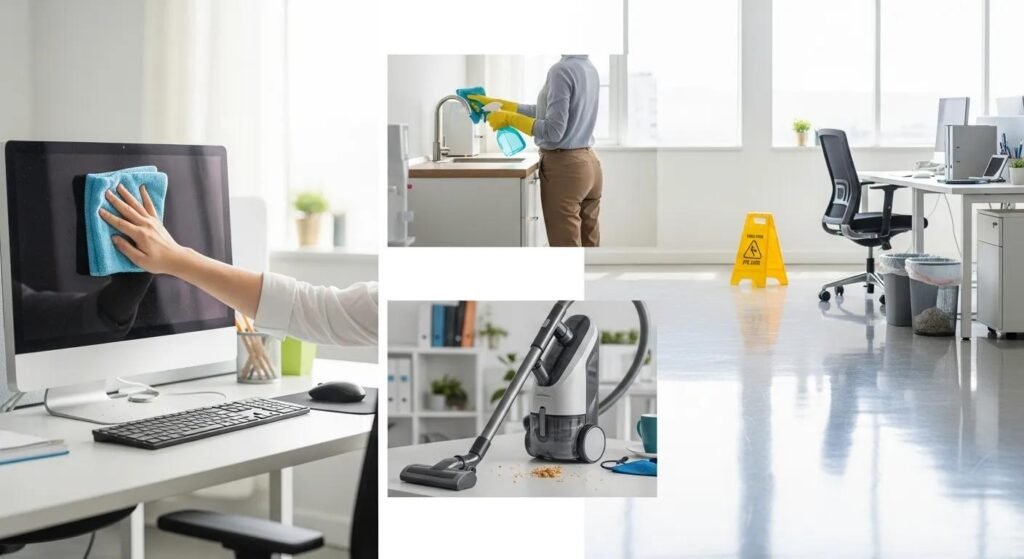
Essential Daily Office Cleaning Tasks
A clean, organised office supports productivity and employee well-being. Daily cleaning preserves appearance and reduces germ spread. This guide lists core daily tasks, highlights surfaces needing routine attention, and outlines practical waste and recycling approaches while favouring eco-friendly products and biodegradable agents.
The broader concept of a ‘green office’ reinforces these measures, promoting a holistic approach to environmental management and occupant well-being.
Green Office Benefits: Health, Energy, and Ecological Footprint
In recent decades, the green office concept has grown as a practical environmental management system for workplaces. Its primary objectives include improving occupant health, conserving energy, reducing carbon dioxide emissions, and lowering the ecological footprint of offices.
Green office, its features and importance for sustainable environmental management:
A comparative review in search for similarities and differences, S Aroonsrimorakot, 2019
Essential Eco-Friendly Daily Office Cleaning Tasks for Sustainable Workspaces
Focus daily routines on hygiene and minimal environmental impact. Core tasks are:
- Trash Removal: Empty bins to avoid overflow and odours.
- Disinfection of High-Touch Surfaces: Wipe doorknobs, switches and shared devices frequently.
- Spot-Cleaning Floors: Remove spills and stains promptly to protect flooring.
Using certified eco-friendly cleaning products supports sustainability. The Green Bucket supplies environmentally friendly solutions that align with these practices.
What Are the Essential Daily Office Cleaning Tasks for a Healthy Workspace?
Prioritise a short, consistent set of daily actions to protect workplace health, including:
- Trash Removal: Properly dispose of waste to maintain order.
- Disinfecting High-Touch Surfaces: Regularly clean frequently touched areas to reduce illness transmission.
- Restroom Maintenance: Keep restrooms clean and stocked.
Reliable daily attention creates a healthier environment and supports productivity.
Which Surfaces Require Daily Disinfection and Eco-Friendly Products?
Surfaces needing daily attention include:
- High-Touch Surfaces: Desks, keyboards and phones.
- Restroom Fixtures: Toilets, sinks and door handles.
- Kitchen Areas: Break-room counters and tables.
Choosing eco-friendly products for these tasks protects occupants and the environment. The Green Bucket offers biodegradable agents suitable for daily use.
How to Effectively Manage Waste and Recycling in Offices?
Create simple, structured waste and recycling processes to boost sustainability:
- Adopt Eco-Friendly Methods: Start recycling programmes and reduce waste at source.
- Encourage Recycling: Use clearly labelled recycling bins for easy sorting.
- Employee Training: Teach staff correct separation and disposal.
These steps improve sustainability performance and reduce environmental impact.
Effective waste management strategies, including recycling and reuse, are essential to meeting sustainable development objectives within an office setting.
Sustainable Waste Management: Recycling, Reuse, and Resource Conservation
Waste management comprises the processes that handle waste materials, including collection, transport, processing and disposal. Strategies such as waste prevention, recycling, reuse and recovery reduce landfill pressure, conserve natural resources and save energy. These measures support more efficient and sustainable resource use.
Waste management strategies for sustainable development, C Wan, 2019
How Can You Integrate Eco-Friendly Office Cleaning Products into Daily Janitorial Tasks?
Integrate eco-friendly products using clear selection and staff training. Key measures:
- Utilise Biodegradable Cleaners: Prefer cleaners that break down naturally.
- Employ Non-Toxic Disinfectants: Choose disinfectants with lower toxic profiles.
- Provide Regular Staff Training: Teach correct dilution, application and safety.
Such measures let offices use eco-friendly products effectively without compromising cleaning performance.
While integrating eco-friendly products offers clear benefits, it remains necessary to understand the profiles and potential challenges of various non-QAC disinfectant agents.
Eco-Friendly Disinfectants: Health, Environment, and Biodegradability
This review examines the health, environmental and material-compatibility profiles of non-QAC agents, including alcohols, chlorine compounds, hydrogen peroxide, peracetic acid and phenolics. Although these agents may reduce some risks linked to QACs, they can introduce other challenges such as respiratory irritation, corrosiveness, systemic toxicity and ecological persistence. Hydrogen peroxide and peracetic acid offer favourable biodegradability but may affect wastewater systems or sensitive equipment.
Beyond quaternary ammonium compounds: Evaluating the harms of non-QAC disinfectant agents in healthcare and industry, MK Ng, 2025
What Are the Benefits of Using Biodegradable Cleaning Agents?
Biodegradable cleaning agents offer practical advantages:
- Improved Indoor Air Quality: Fewer harsh chemicals improves indoor air.
- Reduced Illness Transmission: Effective cleaning helps limit germ spread.
- Lower Environmental Impact: They break down naturally and reduce pollution.
These benefits make biodegradable agents a sensible choice for offices.
Which Sustainable Cleaning Supplies Are Recommended for Daily Use?
Prioritise effective, low-impact supplies:
- Biodegradable Cleaners
- Non-Toxic Disinfectants
- Sustainable Paper Products
Using these items improves the environmental performance of daily cleaning.
What Is the Optimal Office Cleaning Schedule to Maintain Sustainability and Hygiene?
Balance daily, weekly and monthly tasks:
- Daily: Tackle high-touch surfaces, waste and restrooms.
- Weekly: Deeper cleaning of common areas and targeted disinfection.
- Monthly: Deep clean carpets, upholstery and hard-to-reach areas.
This schedule keeps spaces clean while supporting sustainability goals.
How to Structure a Daily Janitorial Routine for Maximum Efficiency?
Structure routines to reduce repetition and ensure quality:
- Organise Tasks: Sequence work by priority and location.
- Quality Assurance: Use inspections to confirm standards.
- Regular Reviews: Periodically refine procedures.
A clear routine improves consistency and service delivery.
What Tools and Checklists Support Consistent Eco-Friendly Cleaning?
Standardised tools and checklists help maintain consistency:
- Cleaning Checklists
- Eco-Friendly Products
- Employee Training Materials
These tools create repeatable processes that support sustainable outcomes.
Why Is Sustainable Office Cleaning Important for Health and Environmental Impact?
Sustainable cleaning provides measurable benefits:
- Health Improvement: Fewer harmful chemicals improves occupant health.
- Cost Savings: Waste reduction and efficient practices lower costs.
- Environmental Impact: Eco-friendly methods protect resources and reduce pollution.
These factors make sustainable cleaning a strategic workplace choice.
How Does Green Cleaning Improve Indoor Air Quality and Employee Wellbeing?
Green cleaning supports health and productivity by:
- Improving Air Quality
- Reducing Chemical Exposure
- Enhancing Productivity
Adopting green cleaning yields both health and performance benefits.
What Are the Environmental Benefits of Choosing Eco-Friendly Cleaning Products?
Eco-friendly products offer clear environmental advantages:
- Lower Indoor Emissions
- Reduced Health Risks
- Minimised Long-Term Impact
These benefits support choosing sustainable products for office programmes.
Frequently Asked Questions
What are the best practices for maintaining office cleanliness during flu season?
Increase disinfection of high-touch surfaces, provide hand sanitiser and encourage handwashing. Ask unwell staff to stay home to reduce workplace transmission.
How can employees contribute to maintaining a clean office environment?
Employees should tidy work areas, dispose of waste correctly and use recycling bins. Team initiatives and clear expectations reinforce shared responsibility.
What are the signs that an office cleaning routine needs improvement?
Signs include frequent complaints, persistent odours, visible dust, inconsistent disinfection and overflowing bins. Use staff feedback to prioritise fixes.
How can technology assist in office cleaning and maintenance?
Cleaning management software, smart sensors and automated devices (for routine vacuuming) can streamline scheduling, supply tracking and monitoring, freeing staff for specialised tasks.
What are the long-term benefits of maintaining a clean office environment?
Long-term benefits include improved employee health, fewer sick days, better morale and an enhanced company image. Regular maintenance also extends the life of furniture and equipment.
How can offices ensure compliance with eco-friendly cleaning standards?
Establish protocols, train cleaning staff, conduct audits and source products with recognised environmental certifications. Maintain an approved inventory and involve employees in sustainability efforts.

CEO
With 14+ years in commercial cleaning, I provide reliable, high-quality service for medical, office, and corporate spaces. Renowned for attention to detail, eco-friendly solutions, and building trusted client relationships across Central Florida.