
Orlando’s Eco-Friendly Cleaning Comparison: Green Bucket vs Jani-King
Commercial cleaning decisions hinge on standards, reliability, and the long-term health of occupants and assets. This article evaluates two distinct approaches — a Central Florida, eco-focused operator and a national franchise model — to help procurement managers and facility leaders choose the best janitorial partner for Orlando-area offices, medical practices, and retail spaces. Readers will learn how eco-friendly cleaning standards compare, which service categories and customization options each model typically provides, how pricing and value propositions differ, and which customer-experience factors matter most for local businesses. The analysis focuses on sustainability measures, service breadth (janitorial, office, medical, floor and carpet care), pricing frameworks, and technology and health protocols that shape cleaning outcomes in 2026. Throughout, practical checklists, comparison tables, and actionable questions for RFPs are provided to simplify vendor evaluation and support buying decisions for commercial cleaning in Orlando and Central Florida.
Who Are The Green Bucket LLC and Jani-King? Company Overviews and Service Models
Both providers operate within the commercial cleaning category but represent different business models that influence service delivery and client experience. The Green Bucket LLC is a Central Florida lead-generation and service-focused company that emphasizes eco-friendly commercial cleaning, janitorial services, office cleaning, medical practice cleaning, and floor and carpet care, targeting Orlando, Winter Park, Lake Mary, Altamonte Springs, and Kissimmee. Jani-King is a national franchise organization whose model centers on franchised operators delivering standardized protocols supported by national training and procurement resources. The Green Bucket emphasizes a “clean for health” approach, while the franchise model applies standardized operating procedures at scale; this difference affects responsiveness, customization, and local accountability. Understanding these structural contrasts helps businesses decide whether localized, health-focused services or franchise-scale consistency better match operational needs and compliance requirements.
Research highlights the inherent differences in stability and operational models between independent businesses and established franchises.
Franchise vs. Independent Business Performance
Venturing into a small business is risky. Approximately 400,000 small businesses fail each year (The State of Small Business 1986). A conservative estimate of the failure rate of start-up firms in their first 5 years is close to 65% (Hodgetts 1982). However, many would-be entrepreneurs minimize their business risk by purchasing a franchise rather than starting from scratch. In contrast, only about 2.5% of franchise-owned outlets discontinue operations per year, many for reasons other than economic (“Franchising is Management for Success” 1986).
The impact of franchising on the financial performance of small firms, JN Pearson, 1986
The Green Bucket’s local presence and UVPs make it a natural fit for organizations prioritizing green products, minimal disruption, and staff vetting. Jani-King’s national reach offers advantages in supply-chain access and standardized training but may produce variable results across franchisees. Below is a concise list of core UVPs to guide initial vendor short-listing.
- The Green Bucket’s immediate strengths include eco-focused cleaning, a “clean for health” philosophy, and background-checked, uniformed staff.
- Jani-King’s strengths include national training programs, franchisor-level resources, and a large franchisee network offering scalability.
- Both models can support medical and office environments, but their operational trade-offs differ in responsiveness and local customization.
Request a free quote or consultation.
What distinguishes The Green Bucket’s local, eco-friendly cleaning approach in Central Florida?
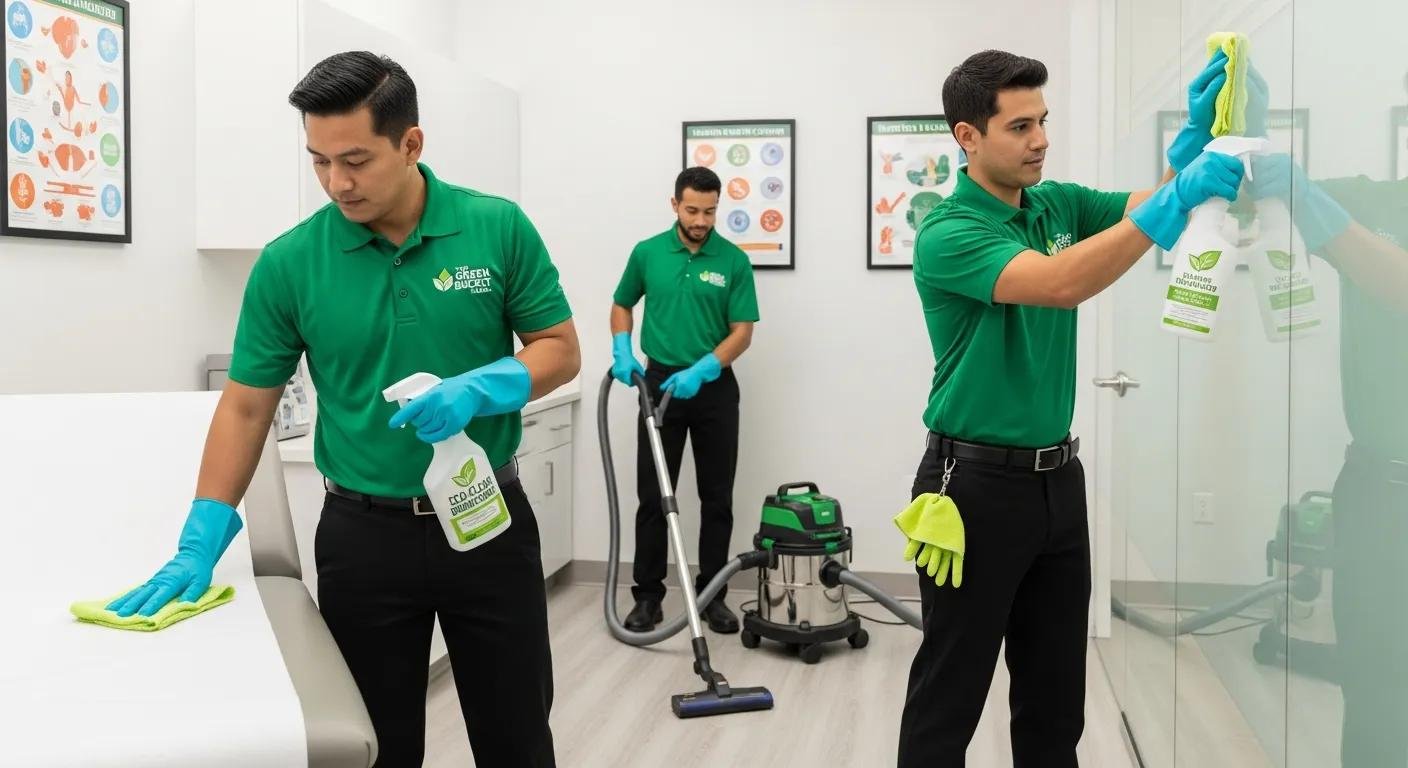
The Green Bucket’s local approach centers on applying eco-friendly janitorial services tailored to Central Florida businesses and medical offices, prioritizing occupant health and low-toxicity product choices. Their “clean for health” messaging translates into operational practices such as using green cleaning products, microfiber systems, and staff protocols designed to reduce chemical exposure and maintain indoor air quality. Staffing practices emphasize background-checked, uniformed technicians who follow checklists aligned with client-specific expectations and minimal operational disruption during business hours. Local business continuity benefits from on-the-ground responsiveness and familiarity with regional facility needs, including floor care and carpet maintenance suited to Florida’s climate. This local focus fosters stronger client relationships and faster site assessments, which in turn supports continuous quality improvement.
How does Jani-King’s national franchise model shape its commercial cleaning services?
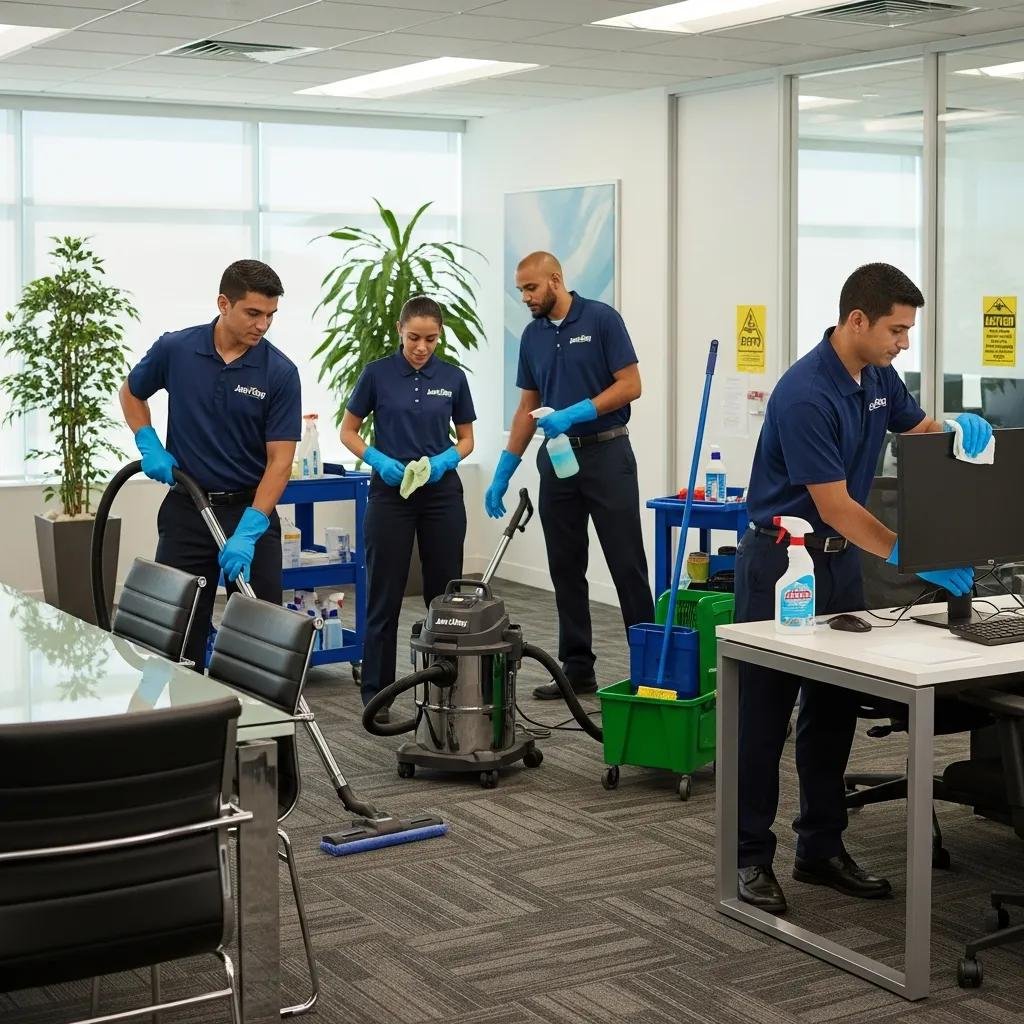
Jani-King’s franchise model standardizes training, operational playbooks, and quality-assurance processes across a network of independent franchise owners, enabling consistent baseline services and access to franchisor-supported resources. The model benefits clients seeking predictable performance, national procurement advantages, and documented procedures that scale across multiple locations. However, franchising introduces potential variability in execution between individual franchisees, making local vetting and performance reviews critical during procurement. For larger contracts spanning many sites, the franchise approach can simplify contracting and reporting while requiring stronger local-accountability clauses to ensure site-level consistency. Understanding franchise dynamics helps buyers set expectation metrics and audit frequencies that mitigate variability.
How Do The Green Bucket and Jani-King Compare in Eco-Friendly Cleaning Standards?
The main differences: The Green Bucket emphasizes locally selected green products and health-focused procedures, while Jani-King leverages franchise-level standards and supplier networks that may include both conventional and green options. The Green Bucket selects low-VOC, biodegradable chemistries to reduce occupant exposure, whereas the franchise model implements standardized product lists and training at scale. Choosing between them depends on priorities: strict green-product use and local oversight versus standardized compliance and supply-chain scale.
This section compares certifications, product types, and measurable environmental practices in a concise table to clarify differences and decision criteria. The table uses attributes that matter to procurement and sustainability officers evaluating janitorial partners.
Different cleaning standards can be assessed by certification readiness, product chemistry, and waste/recycling practices.
This table highlights that The Green Bucket centers on green-product usage and local QA, while franchised providers prioritize standardized protocols with variable local green adoption. Procurement teams should request product SDS profiles and VOC metrics for direct comparison.
What green certifications and sustainable practices set each company apart?
Neither company overview in the local data indicates a specific third-party certification by name, so sustainability claims should be evaluated through evidence rather than assumed credentials. Sustainable practices to verify include the use of biodegradable ingredients, low-VOC formulations, refillable packaging, and documented QA audits. For buyers, asking for product safety data sheets, evidence of microfiber system adoption, and documentation of waste-reduction programs provides measurable verification of sustainability claims. The semantic triple helps frame this: Product safety data validates green claims, enabling easier comparison across vendors. Verifying these attributes reduces ambiguity and aligns purchasing with organizational environmental goals.
How do their product choices and environmental impacts differ?
Product chemistry, packaging, and equipment efficiency determine environmental impact; a company using plant-based chemistries and refill programs typically lowers lifecycle impacts compared with conventional chemistries and single-use packaging. The Green Bucket tends to prioritize lower-VOC, biodegradable formulas and systems like microfiber to reduce water and chemical use, whereas a franchise model may provide green options through its vendor channels but with variable adoption levels by franchisees. Equipment choices—such as HEPA filtration vacuums and low-water floor scrubbers—also influence energy and water usage and therefore operational sustainability. When comparing vendors, quantify impacts via metrics like VOC concentration, biodegradable content percentage, and water-use per cleaning cycle to make objective decisions.
The effectiveness of eco-friendly cleaning solutions, particularly those leveraging green chemistry, is often evaluated by their performance and alignment with sustainable standards.
Eco-Friendly Cleaning Standards & Green Chemistry
which is less than the commercial soap (80 mL after 30 seconds and 100 mL after 1 minute). However, the lather is sufficient for daily use and aligns with eco-friendly standards.
Revolutionizing eco-friendly Cleaning Solutions by Harnessing Green Chemistry, 2025
What Are the Differences in Service Offerings and Customization Between The Green Bucket and Jani-King?
Service breadth and customization determine how well a cleaning partner adapts to industry-specific requirements such as medical clinics or corporate offices. The Green Bucket offers eco-friendly janitorial services, office cleaning, medical practice cleaning, and floor and carpet care with a local service area focus, which enables tailored scheduling and checklists. Jani-King provides a broad franchise-delivered janitorial portfolio that often includes similar service categories but relies on local franchisees to configure service frequency and specialization. Service breadth should be evaluated not only by category but by ability to deliver medical-grade cleaning protocols, floor restoration, and carpet care schedules that align with tenant operations.
Below is a side-by-side service comparison table to clarify scope, frequency, and customization options across common commercial categories.
This table clarifies that The Green Bucket emphasizes local tailoring and green methods across service categories, while the franchise model offers standardized programs that must be validated at the franchisee level. Buyers should request sample checklists and scope-of-work documents to compare.
Which janitorial, office, medical, and floor care services does each provide?
Both models cover the core categories necessary for commercial facilities: routine janitorial, office cleaning, specialized medical-practice cleaning, and floor and carpet maintenance, though delivery differs by organization. The Green Bucket focuses on eco-friendly protocols across these categories, applying microfiber, low-toxicity chemistries, and staff training that align with health-focused cleaning. Franchise-based providers deliver standardized service bundles and can mobilize larger teams for multi-site contracts but require local vetting to confirm expertise in medical-grade disinfection and advanced floor restoration. When evaluating vendors, request examples of medical cleaning checklists, floor restoration case notes, and client onboarding processes to compare capability.
Evaluating cleaning protocols in healthcare settings is crucial, especially when comparing eco-friendly approaches to traditional methods for both hygiene and environmental impact.
Eco-Friendly Cleaning in Healthcare: Hygiene & Environmental Impact
Both protocols utilize the same detergents and industrial washing machines, but they differ in the specific cleaning agents used and the frequency of application. This study aims to evaluate the effectiveness of eco-friendly cleaning protocols in maintaining hygiene standards in healthcare settings compared to traditional methods, and to assess their environmental footprint.
Eco-Friendly vs. Traditional Cleaning in Healthcare Settings: Microbial Safety and Environmental Footprint, R Fontana, 2025
How flexible and tailored are their cleaning solutions for various business types?
Flexibility is a function of local accountability and contract design. The Green Bucket’s local orientation enables personalized onboarding, rapid schedule changes, and checklist customization for offices, clinics, and schools, which benefits clients with dynamic operational windows. Franchised providers can offer tailored solutions but often require stronger SLA language and site-specific performance metrics to ensure responsiveness. Example scenarios: a medical practice needing after-hours terminal cleaning is best served by a provider offering tight local windowing and clinical protocols; a multi-site retail chain may prefer a franchise’s centralized procurement and reporting. Ask prospective providers for onboarding timelines, custom checklist samples, and escalation procedures to ensure fit.
How Do Pricing Models and Value Propositions Compare for The Green Bucket and Jani-King?
Pricing structure typically follows common industry models—per-square-foot rates, flat monthly contracts, or a la carte per-visit billing—with transparency and included services varying by provider. The Green Bucket often positions value around eco-friendly outcomes, reduced occupant exposure, and tailored service, while a franchise model emphasizes standardized deliverables and scalable reporting. The semantic triple clarifies buyer logic: Pricing model determines cost drivers and ROI; choosing the right model depends on facility size, required services, and long-term health and maintenance goals. Below is a table comparing pricing model types, sample cost drivers, and long-term benefits to guide procurement evaluation.
Comparing models helps buyers decide when per-square-foot simplicity or monthly flat-fee predictability offers better value for their operational profile.
What are the cost structures and transparency levels of each company?
Transparency hinges on how line items are presented and whether consumables, labor, and special tasks are included or billed separately. The Green Bucket’s local contracts typically emphasize included green consumables and clearly defined scopes to avoid surprise charges, while franchise-based proposals require careful line-item review of franchisor-standard inclusions and local franchisee add-ons. Recommended RFP questions include requesting a sample invoice, defining what constitutes a “deep clean,” and asking how rate adjustments for specialty services (like carpet restoration) are handled. Clear contract terms, periodic audits, and service-level metrics reduce billing disputes and clarify true cost comparisons.
Request a free quote or consultation.
What long-term savings and benefits do eco-friendly cleaning services offer?
Eco-friendly cleaning often yields long-term savings through reduced surface degradation, lower occupant absenteeism from improved indoor air quality, and enhanced brand reputation among clients and employees. For example, microfiber systems can extend the life of floor finishes and lower chemical use, while low-VOC products reduce HVAC load and occupant discomfort, translating into fewer sick days. Non-monetary benefits like client-facing perception of a healthy workplace can support retention and recruitment. When quantified, these benefits form part of the total cost of ownership calculation that should be used alongside direct cleaning costs in vendor selection.
Why Choose Local Expertise or National Reach? Customer Experience and Support in Central Florida
Local expertise offers responsiveness and tailored relationships, while national reach provides standardized processes and procurement scale; the right choice depends on priorities like single-site responsiveness versus multi-site management. The Green Bucket’s Central Florida focus supports faster on-site response, personalized account management, and an understanding of local facility challenges such as humidity-driven floor care needs. National franchisors provide resources for large contracts and consistent baseline training across locations, but local franchisee performance must be validated to ensure service levels meet expectations. Buyers should weigh responsiveness, customization, reporting requirements, and procurement simplicity when choosing between local and national options.
- Pros of Local Providers: Faster emergency response, deeper local knowledge, and greater customization.
- Pros of National Franchises: Standardized training, centralized procurement, and scalability for multi-site contracts.
- Cons / Risks to Mitigate: Potential variability among franchisees; limited capacity for local providers on very large accounts.
This list helps procurement teams quickly map organizational priorities to provider strengths and risks.
How does The Green Bucket’s local focus enhance responsiveness and client relationships?
The Green Bucket’s geographic concentration in Orlando and surrounding Central Florida communities supports rapid site visits, personalized account teams, and continuity with staff who understand local facility patterns. This proximity allows for quicker emergency responses, on-site QA walkthroughs, and faster implementation of schedule changes with minimal operational disruption. Local account managers can build institutional knowledge of a client’s preferences, enabling more effective customization and continuous improvement. For businesses prioritizing close partnership and predictable presence, local expertise often results in stronger service outcomes and faster issue resolution.
What advantages and challenges come with Jani-King’s franchise presence?
Jani-King’s franchise model provides advantages in standardized training, national procurement contracts, and the capacity to deploy teams across many locations, making it attractive for larger multi-site clients. Challenges include variability in local franchisee performance and the need for stronger contractual SLAs and audit clauses to ensure consistent delivery. To evaluate a franchise option, buyers should request franchisee performance histories, local references, and franchisor oversight mechanisms. Balancing scale advantages with local performance verification is key to achieving predictable service levels.
Request a free quote or consultation.
What Innovations and Health Protocols Differentiate The Green Bucket and Jani-King in 2026?
Technology and health protocols now shape both efficiency and measurable health outcomes in commercial cleaning. Innovations such as IoT sensor-based scheduling, digital QA checklists, and selective use of low-impact mechanical cleaning tools reduce missed tasks and optimize route planning. The Green Bucket applies technology and green protocols within a local QA loop, while franchise models deploy standardized QA platforms at scale; either approach can improve outcomes if implemented with measurable KPIs. Quality assurance systems, employee training programs, and documented health protocols are essential for verifying that cleaning reduces pathogen transmission risk and supports occupant well-being.
This section outlines common tech and protocol elements that facilities should require in vendor evaluations and provides a short checklist for QA and health-safety measures.
- Require digital QA reports with time-stamped task completion.
- Ask about sensor-driven scheduling to reduce wasted labor and chemical use.
- Verify staff training on PPE, cleaning sequences, and clinical-grade disinfection when relevant.
These items form the operational baseline to compare modern providers effectively.
How do technology and quality assurance systems improve cleaning efficiency?
Digital QA platforms and IoT-based scheduling improve cleaning efficiency by tracking completed tasks, identifying missed areas, and optimizing staff routing to reduce travel time and energy use. Sensor data informs scheduling and supply replenishment, reducing waste and ensuring consistent service delivery. Digital checklists enable transparent client reporting and rapid corrective actions, while route optimization lowers labor hours per site without sacrificing quality. When evaluating providers, request demonstrations of QA dashboards, sample reports, and evidence that digital systems link to continuous improvement processes.
What health, safety, and employee well-being measures are prioritized by each company?
Essential measures include staff background checks, training in proper PPE use, documented cleaning sequences for high-touch surfaces, and policies that minimize occupant chemical exposure. The Green Bucket emphasizes background-checked, uniformed staff and a “clean for health” approach aimed at lower-toxicity product use and occupant safety. Franchise models often mandate franchisor-level training and safety protocols that franchisees must follow, though local adherence should be verified. Buyers should request documentation of training curricula, PPE policies, and incident reporting procedures to ensure both occupant safety and employee well-being are prioritized.
Request a free quote or consultation.